
The 8 Best Impartner Alternatives in 2026 (Compared)
The best Impartner alternatives in 2026 — comparable enterprise platforms like Channelscaler, ZINFI, Channeltivity, and Magentrix, plus lighter, cheaper modern PRMs like PartnerPortal, Kiflo, JourneyBee, and Introw, compared on CRM coverage, depth, and price.
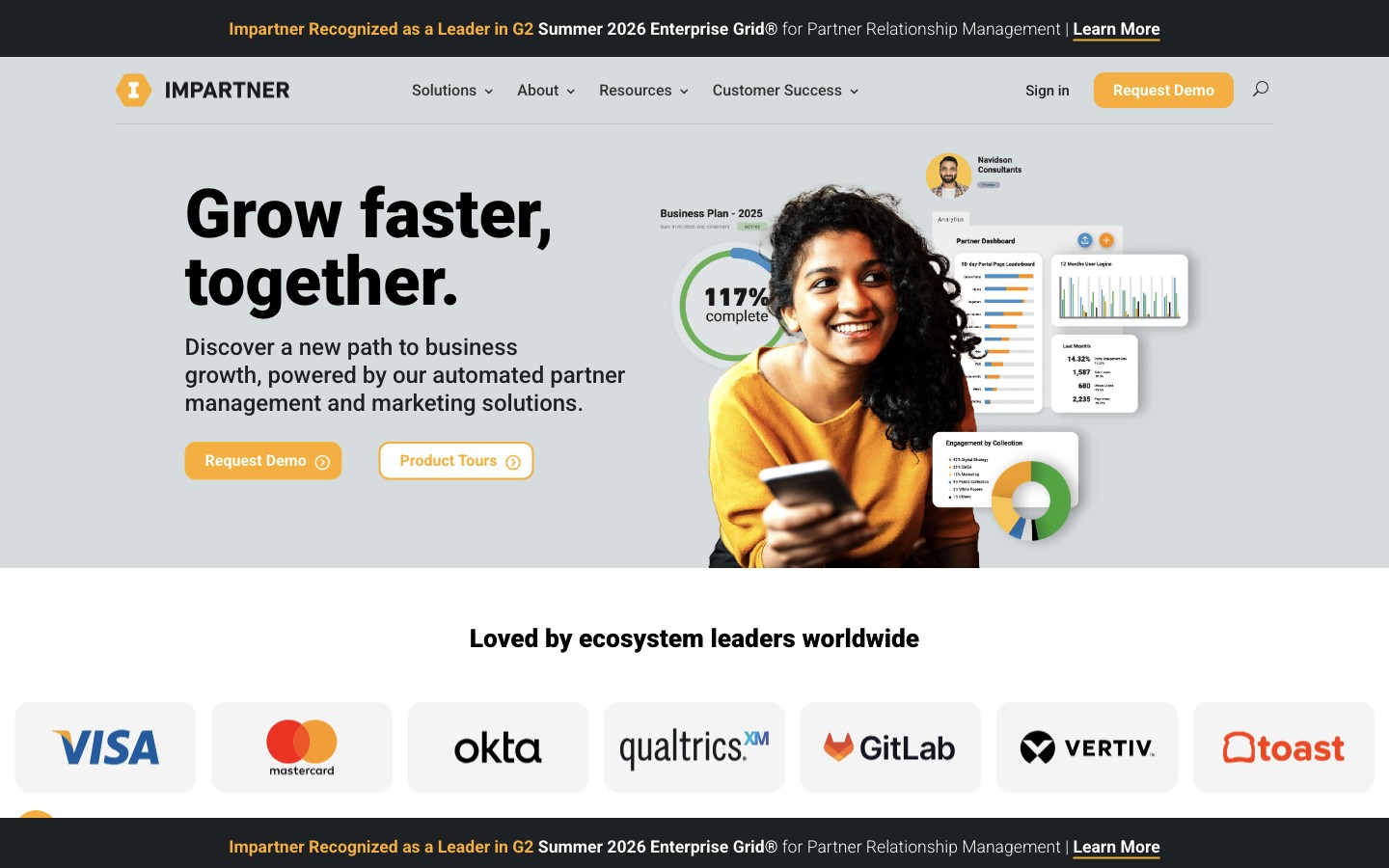
Impartner is the enterprise heavyweight — TCMA, MDF, compliance, channel BI, multi-decade pedigree. That same depth is why many teams bounce: $30k–$150k+/year, a real implementation, and more platform than a lean program will use. Some shoppers stay in the enterprise peer set (different fit); most step down to a modern PRM. Both paths are mapped below for 2026.
Full disclosure: PartnerPortal publishes this guide and is one of the alternatives listed below. We’ve held ourselves to the same standard as every other tool here — stating who each one is (and isn’t) for — rather than stacking the deck. Where a competitor is the better fit, we say so.
TL;DR: Impartner alternatives fall in two directions. If you still need enterprise depth but a different fit (the lateral move), the closest peers are Channelscaler (Allbound) (deep incentive automation), ZINFI (enterprise TCMA + global multi-tier), Channeltivity (mid-market depth, broader CRM), and Magentrix (no-code customization for Salesforce/Dynamics). More often, though, Impartner is simply more platform, cost, or complexity than a program needs (the down-market move), where the strongest lighter, modern PRMs are PartnerPortal (broad native CRM including Pipedrive, Zoho, and Attio, a free tier, a built-in LMS, and transparent pricing), Kiflo (simple, proven), JourneyBee (AI-native with built-in MDF), and Introw (AI-native, headless, HubSpot-first). Your budget, CRM, and how much scale and governance you actually need decide it.
Impartner in brief
Impartner is an enterprise partner relationship management platform with roots to 1997 and a current chapter from 2015 under CEO Joe Wang and growth-equity backing (roughly $145–180M raised). It’s one of the largest pure-play PRMs, built for organizations running large, complex, often global channels, and it covers not just core PRM but a full channel-marketing stack. It’s a repeat G2 Leader, rated roughly 4.5/5 across 500+ reviews.
The essentials for comparison:
- Scope: core PRM plus TCMA (through-channel marketing automation), MDF, program compliance, channel BI, an LMS module, and the modern Impartner PX partner experience — a genuine end-to-end suite.
- Native CRM sync: Salesforce, Microsoft Dynamics 365, and HubSpot (deep, enterprise-hardened). No native Pipedrive, Zoho, or Attio.
- Pricing: custom, demo-led — the entry Emerge package is roughly $2,000/month (~$24k/year), with total contracts commonly $30,000–$150,000+/year once modules and services are added. No free tier or self-serve signup.
- Notable considerations: enterprise cost, implementation complexity and time, a learning curve, and a sales-led buying cycle.
Enterprise Impartner overview: Impartner PRM. Everything below assumes you’ve already decided Impartner may not be the pick.
Why look for an Impartner alternative
Impartner is an excellent enterprise platform, so this is mostly about fit — is it the right amount of platform for you? The recurring reasons teams evaluate alternatives:
- Cost. Custom pricing typically $30,000–$150,000+/year, plus implementation, with no free tier. For SMB and much of the mid-market, that’s out of range for the value they’d use.
- Complexity and implementation time. The flip side of depth: TCMA, MDF, compliance, and BI take a scoped implementation, professional services, and admin training — weeks to months, not minutes.
- Built for scale you may not have. Impartner is sized for hundreds to thousands of partners across multi-tier, global channels. A program with dozens to a couple hundred partners rarely needs that machinery.
- Native CRM gaps. Excellent for Salesforce, Dynamics, and HubSpot — but no native Pipedrive, Zoho, or Attio. If you run one of those, a purpose-built native sync lives elsewhere.
- Sales-led buying. No self-serve signup or public pricing; expect demos, quotes, and procurement.
- Two directions of “not quite right.” A smaller set need a different enterprise platform — deeper incentive automation, broader CRM, or more customization; more often, teams find Impartner is more than they need and want something lighter and cheaper. Both are covered below.
Practically, Impartner shoppers either stay enterprise (swap peers) or step down (modern PRMs). The table and sections follow that split.
Impartner alternatives at a glance
| Tool | Best for (vs. Impartner) | Native CRMs | Free option | Starting price |
|---|---|---|---|---|
| Impartner (baseline) | Enterprise TCMA + governance | Salesforce, Dynamics, HubSpot | No | ~$30k–$150k+/yr |
| Channelscaler | Deep incentive automation + easy portal | Salesforce, HubSpot | No | ~$20k–$40k/yr |
| ZINFI | Enterprise TCMA + global multi-tier | Salesforce, HubSpot, Dynamics, Zoho, Pipedrive | 30-day trial | ~$20k/yr+ |
| Channeltivity | Mid-market depth + broader CRM (Zoho) | Salesforce, HubSpot, Dynamics, Zoho | No | ~$1,899/mo + modules |
| Magentrix | No-code customization for SF/Dynamics | Salesforce, Dynamics, HubSpot | No | $1,500–$3,000/mo |
| PartnerPortal | Far lighter + broad CRM + free tier + LMS | HubSpot, Salesforce, Pipedrive, Zoho, Attio | Yes | Free – $399/mo |
| Kiflo | Simple, proven, transparent pricing | HubSpot, Salesforce | Trial | $399/mo |
| JourneyBee | AI-native + headless + built-in MDF | Salesforce, HubSpot, Pipedrive, Attio | No (demo) | ~$499/mo |
| Introw | AI-native, headless, HubSpot-first | HubSpot, Salesforce | Yes (1 partner) | Free – $329/mo |
Prices are approximate as of 2026 and depend on partner count and modules; confirm on each vendor’s site. Full category detail lives in our best PRM software roundup.
If you need a different enterprise fit: comparable platforms
Sometimes Impartner isn’t too much — it’s just not the right enterprise fit. Maybe you need deeper incentive automation, a better CRM match, more customization, or a different pricing posture. These four are the platforms most often shortlisted alongside Impartner, ordered roughly nearest-first.
Channelscaler (Allbound)
Best for: mid-market-to-enterprise channels that need deep incentive automation — MDF, rebates, SPIFFs, commissions, claims, and distributor/POS programs — plus an easy partner portal.
Channelscaler is the company formed when Allbound acquired Channel Mechanics and rebranded in 2025 — pairing Allbound’s famously easy portal and playbooks with Channel Mechanics’ incentive-automation engine. Versus Impartner, its distinguishing strength is that incentive depth (rebates, claims, distributor/POS), and reviewers rate its portal among the easiest to use (a combined ~4.5/5 across 450+). The trade-offs: native CRM is Salesforce and HubSpot only (no Dynamics, and HubSpot has reported friction), where Impartner adds Dynamics and deeper TCMA; pricing is quote-based (~$20k–$40k/year typical); and as a freshly merged product, pricing and roadmap are still consolidating. You’d pick it over Impartner for structured incentive automation and portal ease.
Learn more: Channelscaler (Allbound) PRM · Impartner vs Channelscaler
ZINFI
Best for: enterprise and global channel programs wanting Unified Partner Management — PRM plus best-in-class TCMA, LMS, and incentive/MDF management across complex multi-tier ecosystems (resellers, distributors, MSPs, SIs).
ZINFI is Impartner’s most direct enterprise peer on through-channel marketing at scale. It spans the full partner lifecycle (Onboard, Enable, Market, Sell, Incentivize, Accelerate), supports global multi-tier programs, and is highly rated (4.9 on the Microsoft marketplace across 700+ ratings). Pricing isn’t fully public but starts around $20,000/year and scales into enterprise territory, with a 30-day trial advertised. You’d choose ZINFI over Impartner when TCMA breadth and global multi-tier support are the priority and you want a competitive enterprise alternative on price.
Learn more: ZINFI · best PRM software
Channeltivity
Best for: teams that want mid-market channel depth — deal registration, distributor management, MDF — and broader native CRM (including Zoho), at a lower price than Impartner, from an independent vendor.
Channeltivity is a proven, independent (bootstrapped, founded 2007) channel PRM that sits a notch below Impartner in scale but covers real channel depth: a best-in-class deal-registration module, distributor/two-tier management, MDF, and co-branded collateral. Its CRM coverage is actually broader than Impartner’s on one axis — native Salesforce, HubSpot, Dynamics 365, and Zoho — and it’s rated ~4.7/5 across 50+. Pricing is premium mid-market (historically ~$1,899–$2,199/month, now tailored quote-based) with training and MDF as add-on modules — well below Impartner. The trade-offs are lighter customization, reporting, and TCMA than Impartner. A strong “Impartner is too much, but I still need channel depth” option.
Learn more: Channeltivity PRM · Impartner vs Channeltivity
Magentrix
Best for: Salesforce- or Dynamics-centric teams that want a highly customizable, no-code portal they can shape and self-manage — especially with complex, customized CRM environments.
Magentrix is an independent, bootstrapped (founded 2012) no-code platform-as-a-service for partner (and customer) portals, distinguished by CRM schema mirroring — it reflects your Salesforce or Dynamics schema directly instead of field mapping, robust for complex CRM environments — plus a built-in LMS and strong security (ISO 27001, SOC 2 Type II). Rated ~4.6/5 across 115+. Versus Impartner, it’s more of a customizable platform you build yourself than a packaged suite, at published pricing ($1,500–$3,000/month) — far lower entry — though it lacks Impartner’s TCMA depth and carries a steeper admin learning curve. You’d pick it over Impartner for customization and CRM architecture at a fraction of the cost.
Learn more: Magentrix PRM · Impartner vs Magentrix
A couple more, in the same enterprise tier: Salesforce PRM (partner workflows native to Salesforce Experience Cloud, roughly $25/partner/month on top of your Salesforce licensing — a natural fit for deeply Salesforce-committed orgs), and Mindmatrix (its Bridge platform pairs PRM with partner marketing automation and TCMA for ecosystem orchestration). Both are shortlisted against Impartner for Salesforce-native and marketing-heavy programs respectively. See the full field in our best PRM software roundup.
If Impartner is too much: lighter, modern PRMs
This is the most common reason teams leave (or skip) Impartner: it’s more platform, cost, and complexity than the program needs. These four are modern PRMs that cover the essentials — branded portal, deal registration, commissions, CRM sync, training — at a fraction of the cost and setup time. They don’t match Impartner’s TCMA, MDF depth, or enterprise governance; that’s the point.
PartnerPortal
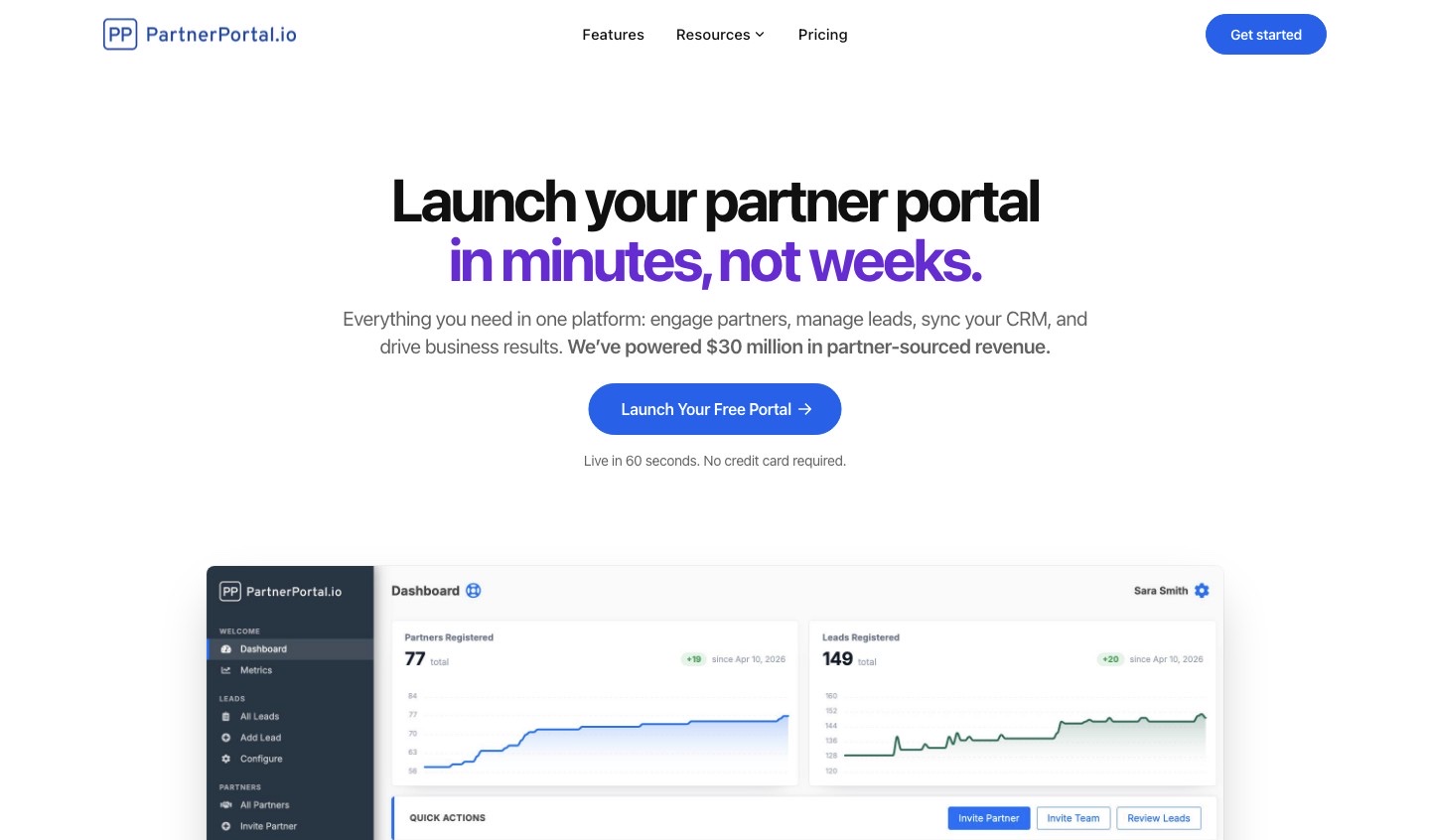
That’s us — stated plainly. Here’s the honest comparison.
Best for: teams that find Impartner too heavy or expensive and want to launch fast, cheaply, and with the broadest native CRM coverage — plus a built-in LMS. Not ideal for: organizations that genuinely need TCMA, deep MDF, program compliance, and channel BI at global scale — that’s Impartner’s territory, not ours.
- How it compares to Impartner: PartnerPortal is the anti-implementation answer — branded portal, deal registration, commissions, LMS with certifications, and CRM sync you can turn on yourself. You lose Impartner’s TCMA / deep MDF / channel BI; you gain a portal that can be live in about 60 seconds, free, with no sales call.
- How it differs: native two-way sync with five CRMs — HubSpot, Salesforce, Pipedrive, Zoho, and Attio — versus Impartner’s Salesforce/Dynamics/HubSpot. Transparent, published pricing and a permanently free tier versus a custom enterprise quote. Commission/revenue tracking ties into Stripe or QuickBooks (multi-currency) rather than an enterprise incentive suite.
- Why pick it over Impartner: Impartner is more platform and cost than you need; you want a fast, affordable launch, broad CRM coverage (especially Pipedrive/Zoho/Attio), and a built-in LMS.
- Pricing vs. Impartner: Free tier, then $249/month (up to 100 partners) and $399/month (unlimited) — versus Impartner’s ~$30k–$150k+/year.
Learn more: PartnerPortal · Impartner vs PartnerPortal
Kiflo
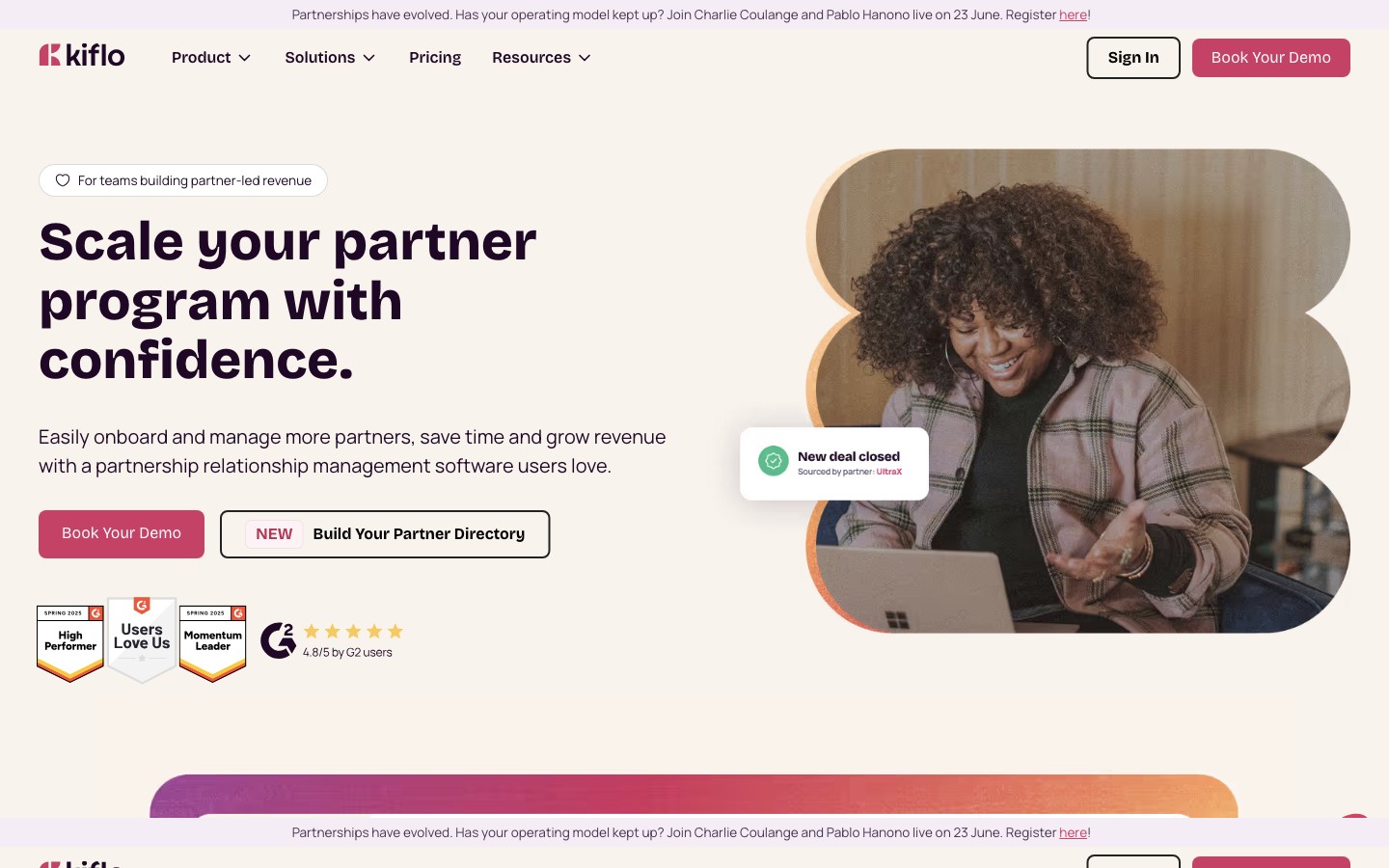
Best for: teams that want a simple, proven, transparently priced SMB/mid-market PRM without enterprise overhead. Not ideal for: teams on Pipedrive/Zoho/Attio wanting native sync, or that need TCMA, MDF depth, or a built-in LMS.
- How it compares to Impartner: Kiflo is a focused, easy-to-run PRM — branded portal, deal and lead registration, a flexible rewards/commissions engine, and account mapping / co-sell — aimed at non-enterprise teams. It’s the opposite of Impartner’s breadth: less to configure, faster to value, far cheaper.
- How it differs: transparent published pricing, a strong track record (founded 2019, ~4.8/5 across 100+ G2 reviews), and in-product emphasis on account mapping and co-sell. Its native CRM footprint is narrower — HubSpot and Salesforce — and it’s light on AI with no built-in LMS (certification tracking only). No TCMA or enterprise governance.
- Why pick it over Impartner: you want maturity, simplicity, and transparent pricing over enterprise depth you won’t use.
- Pricing vs. Impartner: $399/month Core (up to ~50 partners); unlimited requires custom Plus/Premier tiers — a fraction of Impartner.
Learn more: Kiflo PRM · Kiflo vs Impartner
JourneyBee
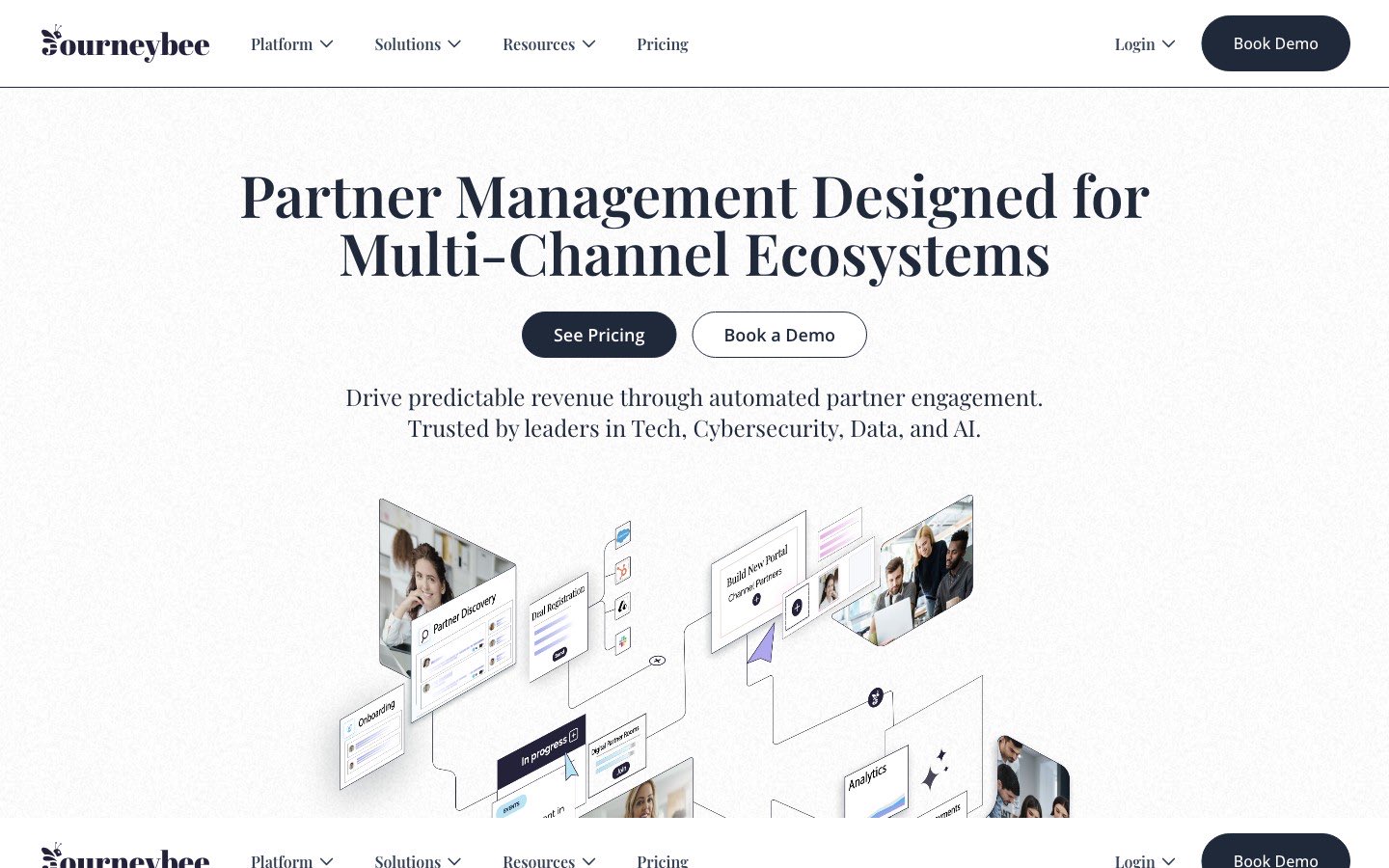
Best for: teams that want a modern, AI-native PRM with built-in MDF and broader CRM than Impartner supports natively — without the enterprise price. Not ideal for: teams wanting the lowest price, a free tier, or a long, proven track record.
- How it compares to Impartner: JourneyBee is a modern 2023-era PRM with a branded portal, deal registration, co-sell, a built-in LMS with graded assessments, and dedicated MDF management — so it carries more channel-marketing capability than most lightweight PRMs, while staying far lighter and cheaper than Impartner.
- How it differs: it’s AI-native and headless — partners register deals off-portal (Slack, Teams, email) and an agentic assistant (Buzz, built on MCP) handles deal registration, lead routing, and content — a modern model Impartner doesn’t center on. It’s native with Salesforce, HubSpot, Pipedrive, and Attio (plus a Zoho guide), broader than Impartner outside the enterprise set, with SOC 2 Type 2 + ISO 27001. It’s young (2023) with a thin review base (~4.7/5 across ~25 reviews) and no free tier.
- Why pick it over Impartner: you want a modern, AI-forward platform with MDF and broad CRM, at a small fraction of Impartner’s cost.
- Pricing vs. Impartner: entry ~$499/month (unlimited partners, up to 3 users), billed by internal-user tier — versus Impartner’s five- to six-figure annual contracts.
Learn more: JourneyBee PRM · JourneyBee vs Impartner
Introw
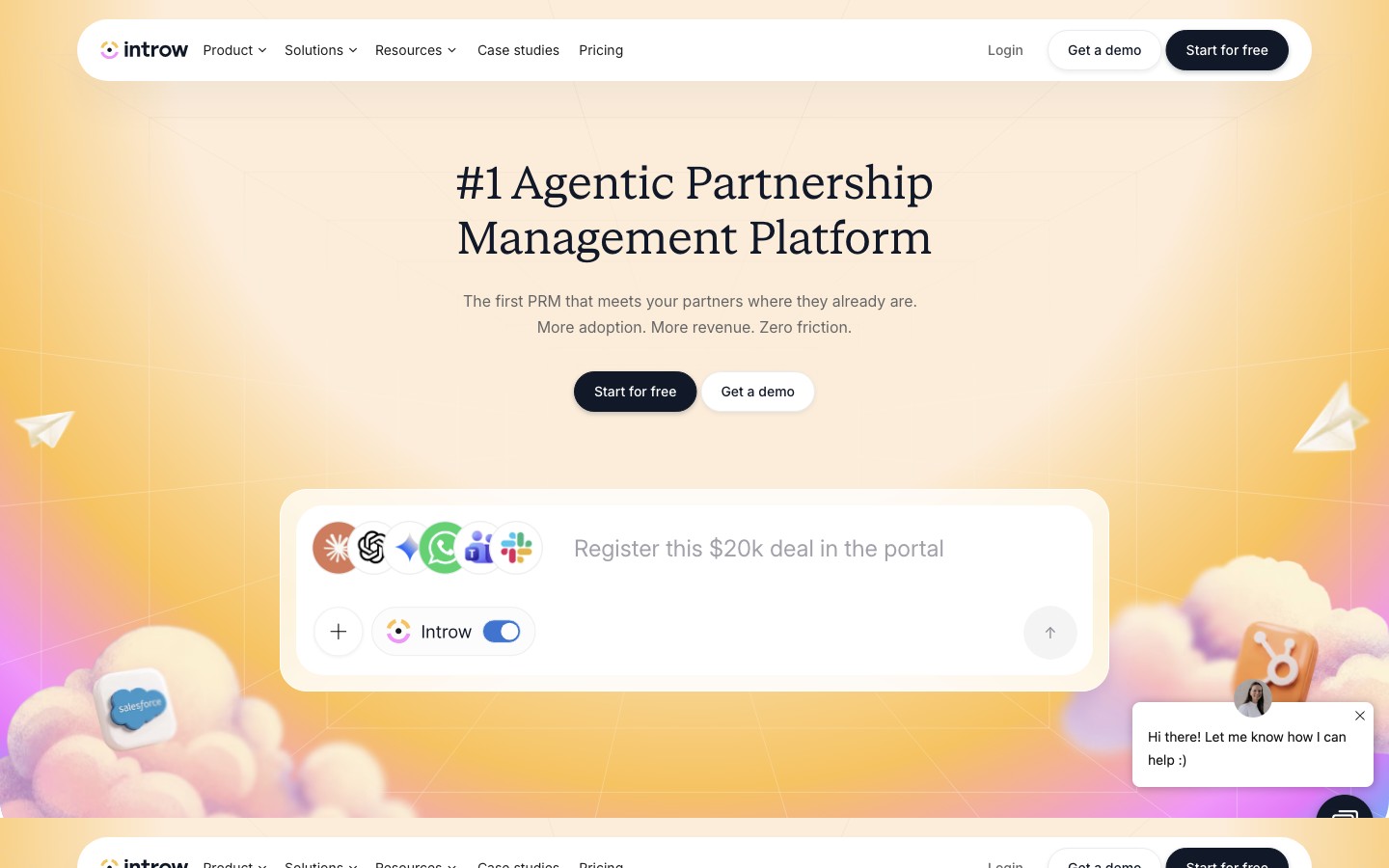
Best for: B2B SaaS teams on HubSpot (or Salesforce) that want a modern, AI-native, headless PRM focused on partner adoption. Not ideal for: teams on Pipedrive/Zoho/Attio, or that need TCMA, MDF, or enterprise governance.
- How it compares to Impartner: Introw is the modern anti-Impartner — a lean, CRM-native, “agentic” PRM founded in 2023, well-rated (~4.8/5 across 90+ reviews), that keeps the CRM as the source of truth and lets partners register deals conversationally via Claude, ChatGPT, Slack, email, or a portal. Where Impartner is a governed enterprise suite, Introw is portal-optional and fast to launch.
- How it differs: native CRM is HubSpot and Salesforce only (Salesforce gated to the $499 Scale tier) — narrower than Impartner and no Pipedrive/Zoho/Attio — and account mapping runs through Crossbeam. It has an AI-enabled LMS and content enablement but no TCMA, deep MDF, or enterprise governance. It’s a 2023 company, so a shorter track record.
- Why pick it over Impartner: you’re a modern SaaS team on HubSpot that wants AI and adoption over enterprise depth, at a tiny fraction of the cost.
- Pricing vs. Impartner: free Starter (1 partner), then $329/month (Pro) and $499/month (Scale) — versus Impartner’s enterprise contracts.
Learn more: Introw PRM · Impartner vs Introw
Which Impartner alternative is right for you
A quick decision guide based on why you’re leaving (or skipping) Impartner:
- You need deep incentive automation (rebates, SPIFFs, claims, distributor/POS) → Channelscaler.
- You need enterprise TCMA and global multi-tier scale → ZINFI (Impartner’s closest enterprise peer).
- You want mid-market channel depth with broader CRM at a lower price → Channeltivity.
- You want deep, no-code customization on Salesforce/Dynamics → Magentrix, or Salesforce PRM if you’re all-in on Salesforce.
- It’s too expensive or complex, and you want to launch fast → PartnerPortal (free tier, broad CRM, LMS, ~60-second setup) or Kiflo (simple, proven).
- Your CRM is Pipedrive, Zoho, or Attio → PartnerPortal (all three native), JourneyBee (Pipedrive/Attio), or Channeltivity (Zoho).
- You want a modern, AI-native or headless model → Introw or JourneyBee.
Decided Impartner is too much and want the lighter path spelled out? Impartner vs PartnerPortal.
Related reading
- Impartner PRM: Features, Pricing & Reviews — the full deep dive on Impartner.
- Impartner vs PartnerPortal — the direct head-to-head.
- Impartner vs Channeltivity, Impartner vs Magentrix, Impartner vs Channelscaler, and Impartner vs Introw — Impartner against each alternative in detail.
- Best PRM Software in 2026 — every major PRM ranked, not just Impartner’s closest peers.
- Partner Relationship Management Platforms: Compare the Market — how the whole landscape is structured.
- Most Affordable PRM Software in 2026 — PRMs ranked by real cost, including hidden fees.
- Best PRM for Pipedrive, Zoho, and Attio — where Impartner isn’t native and which PRMs are.
Stepping down from Impartner without losing CRM breadth? Launch PartnerPortal free or review integrations.
Frequently asked questions
What is the best Impartner alternative?
It depends on why Impartner doesn't fit. If you need enterprise depth but a different fit, the comparable platforms are Channelscaler (Allbound — deep incentive automation), ZINFI (enterprise TCMA and global multi-tier), Channeltivity (mid-market depth, broader CRM), and Magentrix (no-code customization). More often, teams find Impartner is more platform, cost, or complexity than they need and move to a lighter, modern PRM: PartnerPortal (broad native CRM including Pipedrive, Zoho, and Attio, a free tier, a built-in LMS, and transparent pricing), Kiflo (simple, proven), JourneyBee (AI-native with MDF), or Introw (AI-native, headless, HubSpot-first).
What is a comparable enterprise alternative to Impartner?
If you need Impartner-class depth but a different fit, the closest peers are Channelscaler (formerly Allbound — deep incentive automation: MDF, rebates, SPIFFs, claims, distributor/POS, plus an easy portal), ZINFI (enterprise Unified Partner Management with best-in-class TCMA and global multi-tier support), Channeltivity (upper-mid-market channel depth with broader CRM including Zoho, at a lower price), and Magentrix (no-code, deeply customizable, Salesforce/Dynamics schema-mirroring). Salesforce PRM and Mindmatrix are also shortlisted for Salesforce-native and TCMA-heavy programs respectively.
Is there a cheaper or simpler alternative to Impartner?
Yes, dramatically. Impartner is a custom, demo-led enterprise contract typically running from roughly $30,000/year into six figures. Lighter modern PRMs cost a fraction: PartnerPortal has a permanently free tier and paid plans at $249/month and $399/month (unlimited partners); Kiflo starts at $399/month; Introw has a free tier and paid plans from $329/month; JourneyBee starts around $499/month. All four are self-serve or fast to launch, versus Impartner's scoped implementation. If cost and simplicity are the issue, these are the strongest fits.
What is a good Impartner alternative if it is too complex to implement and administer?
Impartner's depth (TCMA, MDF, program compliance, channel BI) is powerful but takes a scoped implementation, professional services, and admin training. If that's the problem, PartnerPortal is the most direct step down — a branded portal live self-serve in about 60 seconds, with a built-in LMS and broad native CRM. Kiflo and Introw are similarly fast and lean. If you still need mid-market channel depth (distributor management, MDF) but less overhead than Impartner, Channeltivity or Magentrix sit in between.
Which Impartner alternative is best for AI or a modern, headless model?
Introw and JourneyBee are the AI-native options. Introw is CRM-native and headless — partners register deals from Slack, Teams, email, or AI assistants like Claude and ChatGPT via MCP, with the portal optional. JourneyBee is also AI-native and headless, with its Buzz agent (built on MCP) plus broader native CRM than Introw and built-in MDF. Both are modern 2023-era platforms that put AI at the center, versus Impartner's enterprise workflow automation and analytics. Neither matches Impartner's TCMA or governance, but if a modern AI model is the draw, they lead.
What is a good Impartner alternative if my CRM is Pipedrive, Zoho, or Attio?
Impartner is native with Salesforce, Microsoft Dynamics 365, and HubSpot only — no native Pipedrive, Zoho, or Attio. PartnerPortal is the broadest fit here, with native two-way sync for HubSpot, Salesforce, Pipedrive, Zoho, and Attio. JourneyBee is native with Pipedrive and Attio (and documents Zoho), and Channeltivity adds native Zoho (plus Salesforce, HubSpot, and Dynamics). If your CRM is outside the Salesforce/Dynamics/HubSpot enterprise set, those are the alternatives to shortlist.
Why do companies look for Impartner alternatives?
The most common reasons are cost (custom pricing typically $30,000–$150,000+/year, no free tier), implementation complexity and time, a learning curve heavier than lean teams want, and native CRM gaps outside Salesforce, Dynamics, and HubSpot (no native Pipedrive, Zoho, or Attio). Many teams simply find Impartner is built for a scale they don't have and want a lighter, faster, cheaper PRM. A smaller set need a different enterprise platform — for deeper incentive automation, better CRM fit, or more customization — and move laterally instead.