
Best PRM Software in 2026
An honest comparison of the best PRM (partner relationship management) software in 2026 — pricing, CRM integrations, and who each tool is really for.
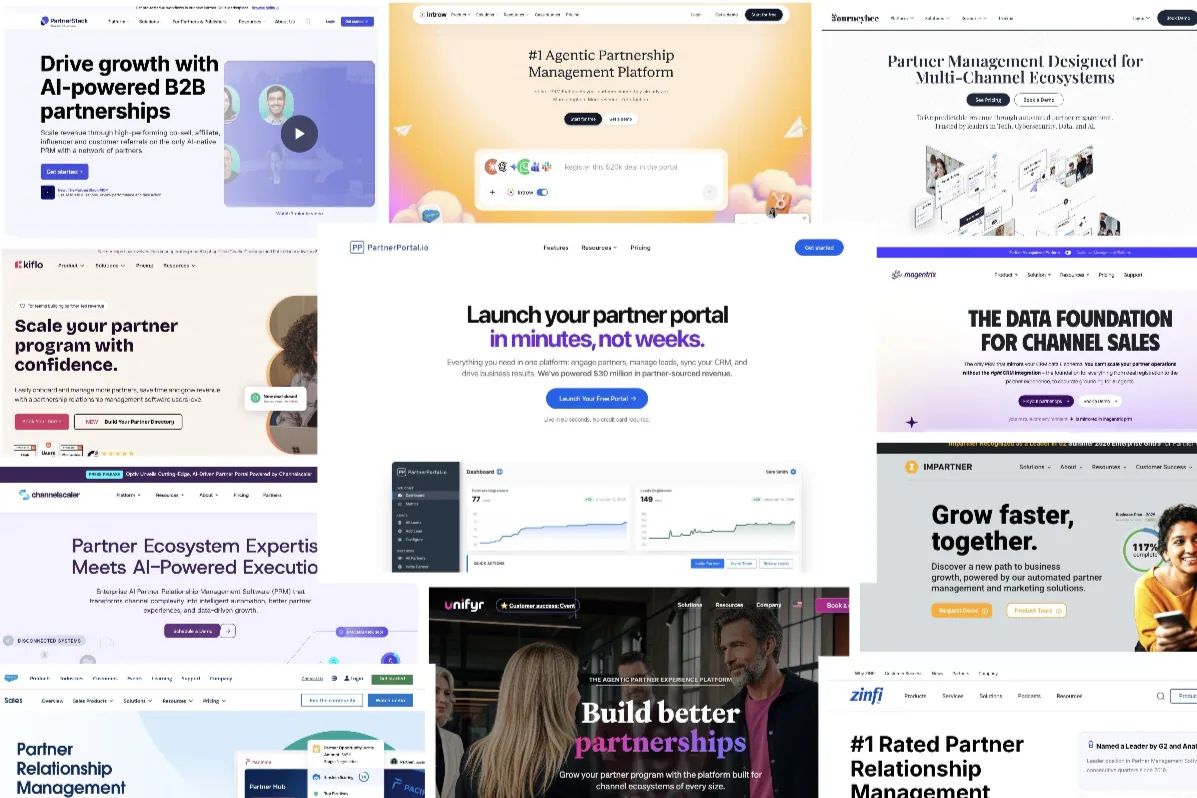
PRM (Partner Relationship Management) software — also called partner management software or channel partner software — helps you run partner programs — referral, reseller, affiliate, and channel — with a real system behind onboarding, deal registration, partner portals, enablement content, and reporting. If your CRM is built for your direct sales team, a PRM is the equivalent system for your partners.
TL;DR: There’s no single “best PRM software” — the right pick depends on your program size, price sensitivity, and partner motion. Here are the best PRM software options in 2026, grouped by the job they do best:
- Best PRM for SMBs & startups: PartnerPortal, Kiflo
- Best PRM for CRM coverage: PartnerPortal
- Best AI-native PRM: Introw
- Best PRM for many partner types: JourneyBee
- Best PRM for affiliate & referral scale: PartnerStack
- Best PRM for Salesforce/Dynamics customization: Magentrix
- Best PRM for Salesforce: Salesforce PRM
- Best enterprise PRM: Impartner, ZINFI, Unifyr, Allbound / ChannelScaler
How we picked the best PRM software (methodology)
We didn’t rank on feature-count or on who has the flashiest AI messaging. We weighted four things a real buyer actually lives with:
- Is it a real PRM? Full partner lifecycle — onboarding, deal/lead registration, portal, enablement, reporting — not just an affiliate-link tracker.
- CRM integration depth. What actually syncs, how reliably, and which CRMs (not just Salesforce and HubSpot).
- Time-to-value. Can a normal team launch in days, or does it need a services project and a quarter?
- Fit for your size and motion. The best enterprise PRM is the wrong tool for most Startups and SMBs, and vice versa.
We deliberately kept the list to genuine PRMs and clearly labeled the edge cases. We didn’t pad it out with affiliate-only tools to hit a bigger number — see Tools we deliberately didn’t rank at the end.
What changed in PRM software in 2026
- CRM-native is the new baseline. Buyers increasingly expect the PRM to live inside their CRM’s data, not maintain a separate copy — and increasingly for CRMs beyond Salesforce/HubSpot.
- Co-selling over static deal registration. More programs are collaborative (shared pipeline, account mapping) rather than one-way lead submission.
- Off-portal engagement. Slack/Teams/email delivery to fight the “portal nobody logs into” problem.
- Faster deployment expectations. “Launch in days” is now table stakes for SMB/mid-market; multi-month implementations are an enterprise-only tolerance.
How to choose the right PRM software (fast)
PRM software selection gets simpler once you answer a few questions:
- Which CRM do you use — and how deep must the integration be? (native two-way sync vs. occasional export; Salesforce/HubSpot vs. Pipedrive/Zoho/Attio)
- What partner motion are you running? (referral, reseller, affiliate, co-sell, distributor)
- What’s your budget? (a free or sub-$300/mo tool for an SMB program, mid-market at ~$250–$2,000/mo, or enterprise at $20k+/yr plus implementation — see the most affordable PRMs if price is the deciding factor)
- How fast do you need to launch? (live this week vs. a multi-month rollout with services)
- How much complexity and governance do you actually need? (a clean portal + deal registration vs. MDF/TCMA, partner tiers, and global-channel controls)
One-sentence heuristic:
- Need enterprise channel governance? Buy an enterprise PRM.
- Need SaaS partner growth at scale? PartnerStack is usually on the shortlist.
- Need a partner portal that launches quickly and integrates deeply with your CRM? Prioritize speed + integration depth over feature bloat.
PRM software comparison table (quick scan)
Use this as the first-pass filter, then read the tool sections. Prices are approximate, as of 2026, and should be verified on each vendor’s site.
| Tool | Best for | CRM integration | Price range* | Free option |
|---|---|---|---|---|
| PartnerPortal | Fast SMB/mid-market portal + broad native CRM depth | HubSpot, Salesforce, Pipedrive, Zoho, Attio | Free – $399/mo | Yes |
| Kiflo | SMB starter PRM | HubSpot, Salesforce | $399/mo – Custom | 14-day trial |
| JourneyBee | Diverse partner types / multi-channel ecosystems | Salesforce, HubSpot, Pipedrive, Attio | ~$499/mo – Custom | Demo only |
| PartnerStack | SaaS affiliate, referral & co-sell at scale | HubSpot, Salesforce | $500 – $4,000+/mo (+ payout fee) | No |
| Magentrix | Heavy customization on SF/Dynamics | Salesforce, HubSpot, Dynamics | ~$1,500/mo – Custom | No |
| Introw | AI-native, headless PRM (CRM-native) | Salesforce, HubSpot (CRM-first) | Free – Custom | Yes (1 partner) |
| Salesforce PRM | Salesforce-first orgs | Salesforce-native only | ~$25/user/mo + SF licensing | No |
| ZINFI | Enterprise channel + TCMA | Salesforce, HubSpot, Dynamics, Zoho, Pipedrive | ~$20k/yr+ (custom) | No |
| Impartner | Enterprise channel governance | Salesforce, HubSpot, Dynamics | ~$25k/yr+ (custom) | No |
| Allbound / ChannelScaler | Mid-market–enterprise co-sell + incentives | Salesforce, HubSpot | ~$20k – $40k/yr | No |
| Unifyr | Enterprise channel + TCMA | Salesforce + enterprise CRMs | Custom (enterprise) | No |
*Pricing changes frequently and often depends on partner count. Confirm current numbers on each vendor’s site or a review platform like the G2 PRM category.
Best PRM software: tool-by-tool breakdown
Ordered roughly by ease of use and starting price — the fastest-to-launch, most SMB-friendly tools first, scaling toward the most enterprise-heavy platforms — not best-to-worst. A few vendors don’t publish pricing; those are placed by typical deal size, and note that costs can scale well beyond the entry point (PartnerStack, for example, also charges a fee on partner payouts). Start near the top if you want to launch fast without a services project; scroll down as your channel-governance and complexity needs grow.
PartnerPortal
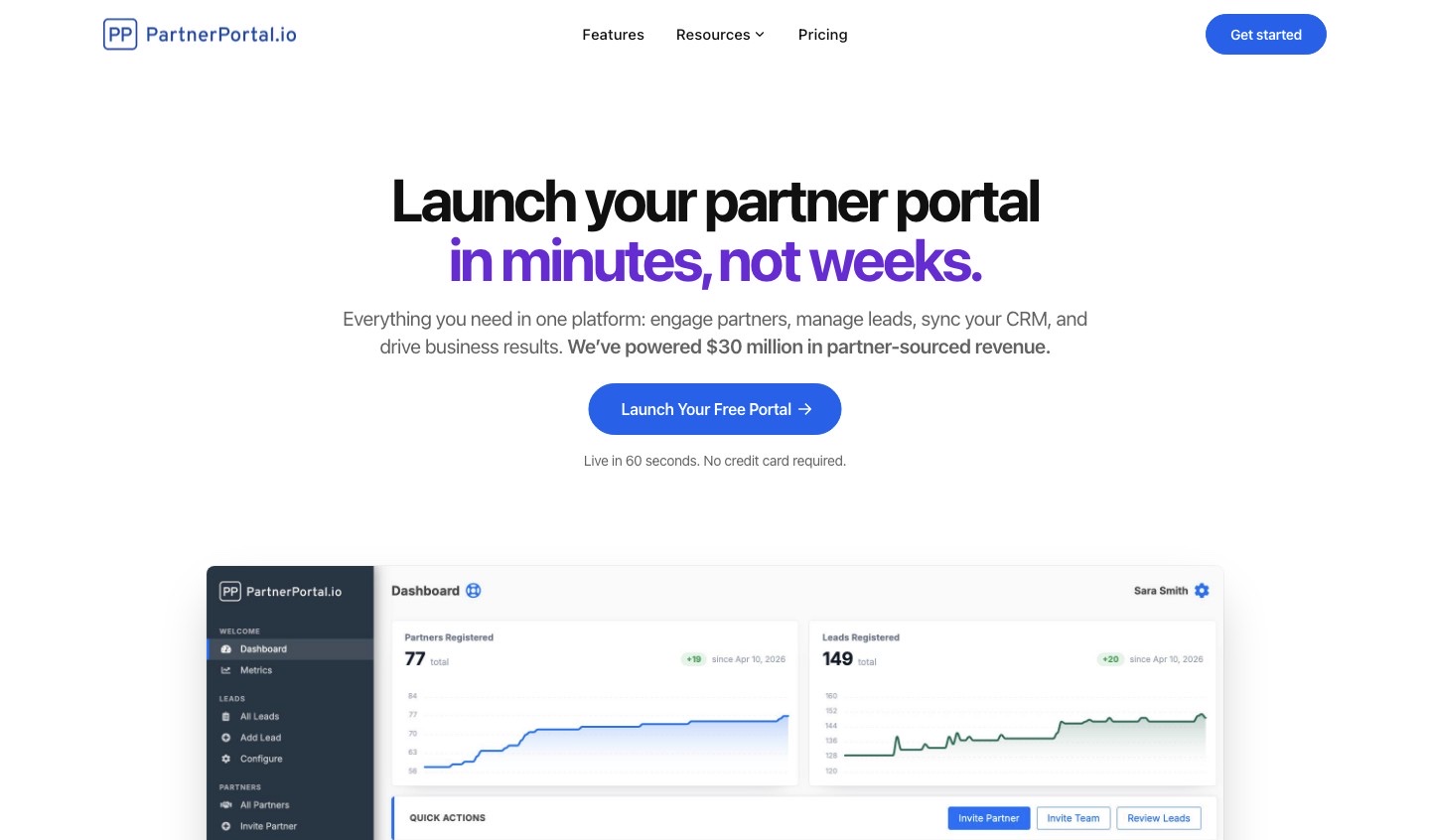
Full disclosure: PartnerPortal publishes this guide. We’ve held ourselves to the same “who should not buy it” standard as every other tool here.
Best PRM for: SMB and mid-market teams that want a partner portal live quickly, with a clean operator workflow — and native CRM integrations beyond just HubSpot and Salesforce. Not ideal for: buyers who need enterprise channel complexity, deep TCMA suites, or a multi-month implementation with dedicated services. If you need Fortune-1000 global-channel governance, Impartner or ZINFI will fit better.
- Strengths:
- Built to launch quickly and stay simple — “in minutes, not months.”
- Genuinely easy to use — clean, modern UI for both operators and partners, so your team and your partners actually adopt it instead of fighting a legacy portal.
- Native CRM integrations for HubSpot, Salesforce, Pipedrive, Zoho, and Attio (with more in progress) — the broadest small/mid-CRM coverage on this list.
- Strong fit for SMB/mid-market motions (referral, reseller, lead-based) with lead/deal registration, partner tiers, flexible commissions, and multi-currency.
- A genuinely free tier — not a time-boxed trial. You can stand up a real partner portal and run a live program without paying, which almost nothing else on this list offers (most competitors give you a demo or a short trial at best).
- Simple, transparent pricing with no per-seat fees — unlimited team members on paid plans, so internal cost doesn’t scale with headcount.
- Trade-offs: intentionally not an enterprise “do everything” channel suite; no MDF/TCMA depth; SOC 2 is planned, not yet in place.
- Pricing: Free tier to launch a real portal (a true free plan, not just a trial); Professional at $249/month (up to 100 partners); Enterprise at $399/month for unlimited partners, leads, and team plus advanced technical needs.
- Bottom line: the best PRM software for SMB and mid-market teams that want to launch fast, integrate deeply with their CRM (including Pipedrive, Zoho, and Attio), and start free.
Learn more: PartnerPortal
Kiflo

Best PRM for: SMBs and growing SaaS teams that need a real PRM quickly, without enterprise overhead. Not ideal for: complex channel governance, heavy automation, or enterprise co-marketing suites.
- Strengths: strong “starter PRM” positioning; simple onboarding; unlimited users per partner and unlimited partner programs; two-way HubSpot/Salesforce sync.
- Trade-offs: the entry Core plan caps active partners (up to 50) — unlimited partners require the custom Plus/Premier tiers; less depth for complex programs (no deep MDF/TCMA).
- Pricing: Core starts at $399/month (billed annually, up to 50 active partners, 3 partner managers); Plus/Premier are custom-priced for unlimited partners; 14-day free trial.
- Bottom line: a solid SMB starter PRM if you’re on HubSpot or Salesforce and want structure beyond spreadsheets without enterprise overhead.
Learn more: Kiflo
JourneyBee
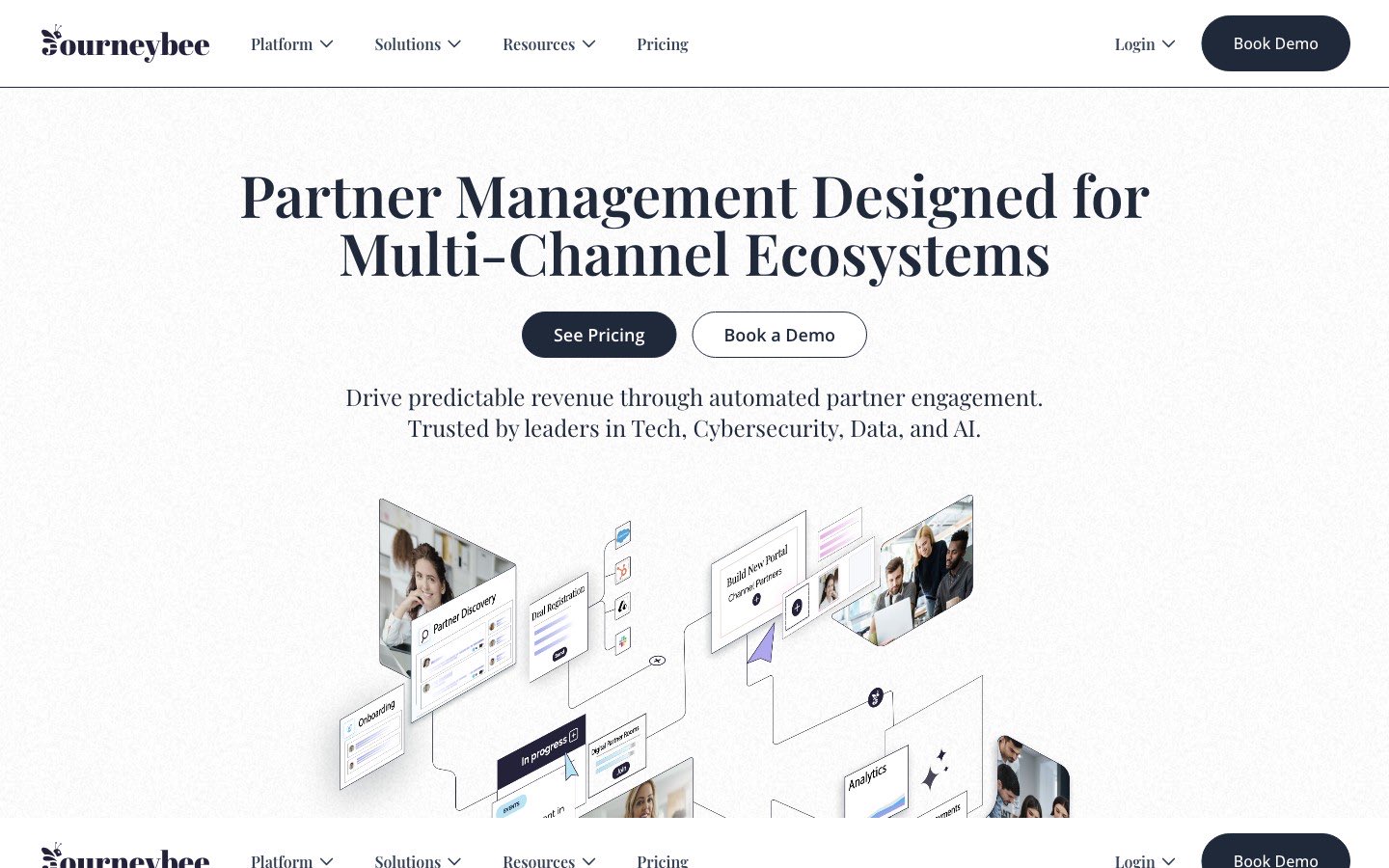
Best PRM for: modern programs juggling many partner types at once — referral, reseller, channel/distributor, affiliate, OEM, ISV — that want a flexible, embeddable partner experience with native CRM sync. Not ideal for: teams that want the lowest starting price, or programs that only ever run a single, simple partner motion.
- Strengths: explicitly built for multi-channel ecosystems, with tailored workflows across a wide range of partner types; modern, consumer-grade UI; custom partner “rooms” you can embed in your own app or CRM; off-portal engagement and digital sales rooms; native CRM sync across Salesforce, HubSpot, Pipedrive, and Attio; fast to launch.
- Trade-offs: newer than the enterprise incumbents, so some niche/complex features are still maturing; starting price is higher than the most budget SMB tools.
- Pricing: starts around $499/month (plans begin at roughly €499 for 3 users with unlimited partners).
- Bottom line: the best PRM software for modern teams running several partner types at once that want a flexible, embeddable partner experience without enterprise weight.
Learn more: JourneyBee
PartnerStack
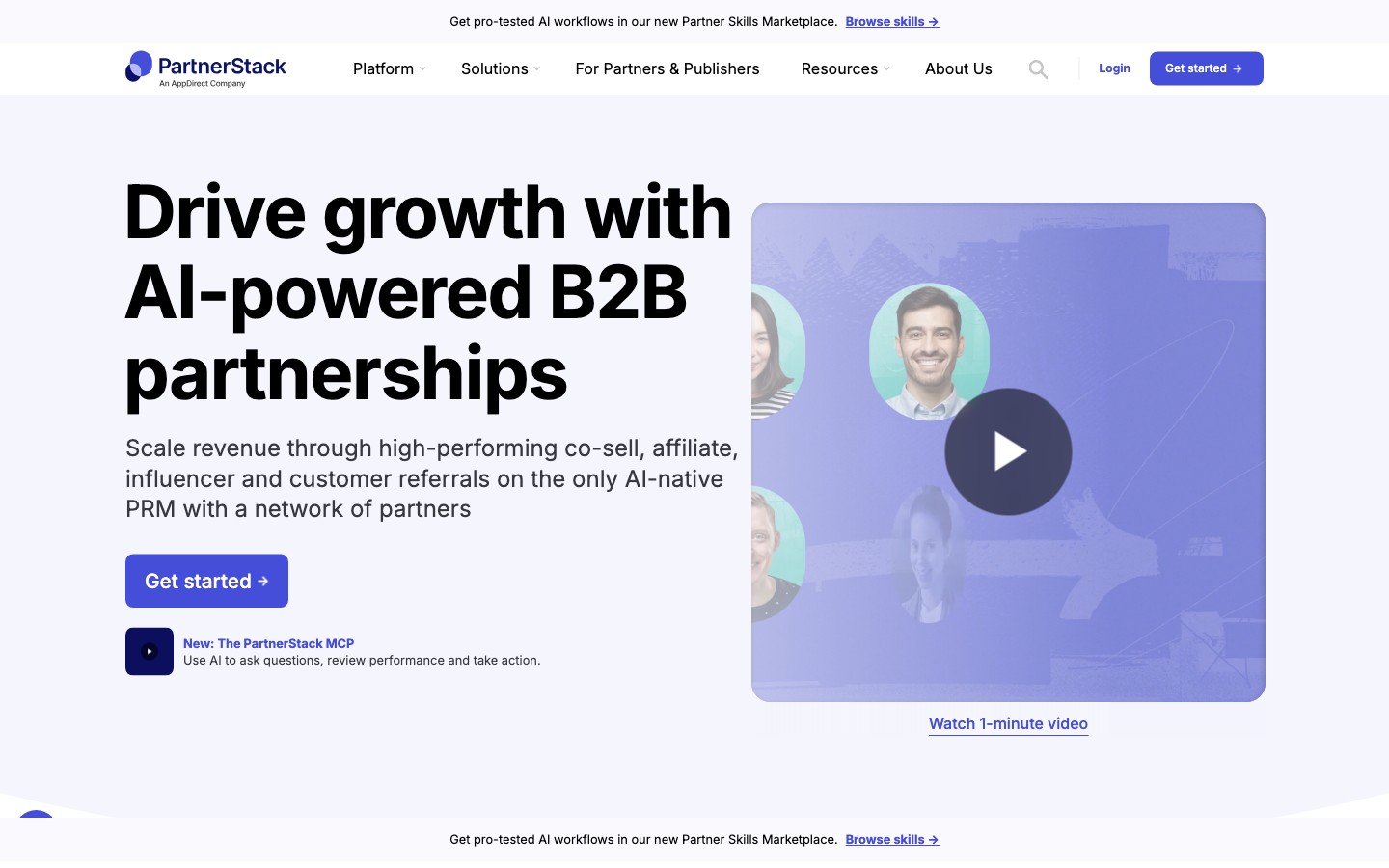
Best PRM for: SaaS companies scaling multiple partner types (affiliate, referral, co-sell, influencer) that want a built-in partner network for recruitment plus automated commission payouts. Not ideal for: teams that want a lightweight, low-cost PRM with minimal implementation.
- Strengths: strong partner-program engine for SaaS; a built-in marketplace/network of 115,000+ active partners for recruitment; automated payouts at scale; mature at “partner-led growth.”
- Trade-offs: it’s an expensive solution — real cost is the subscription plus a percentage fee on every partner payout; your motion needs to fit their model; UI can feel heavy vs. newer tools.
- Pricing: not publicly listed. Third-party data (Vendr) puts early-stage (Starter) plans around $500–$1,200/month and mid-market/enterprise tiers around $1,500–$4,000+/month, plus a 3–15% fee on the commissions you pay partners.
- Bottom line: the best PRM software for B2B SaaS companies scaling affiliate and referral partners at volume — if you can absorb the subscription plus the payout override.
Learn more: PartnerStack
Magentrix
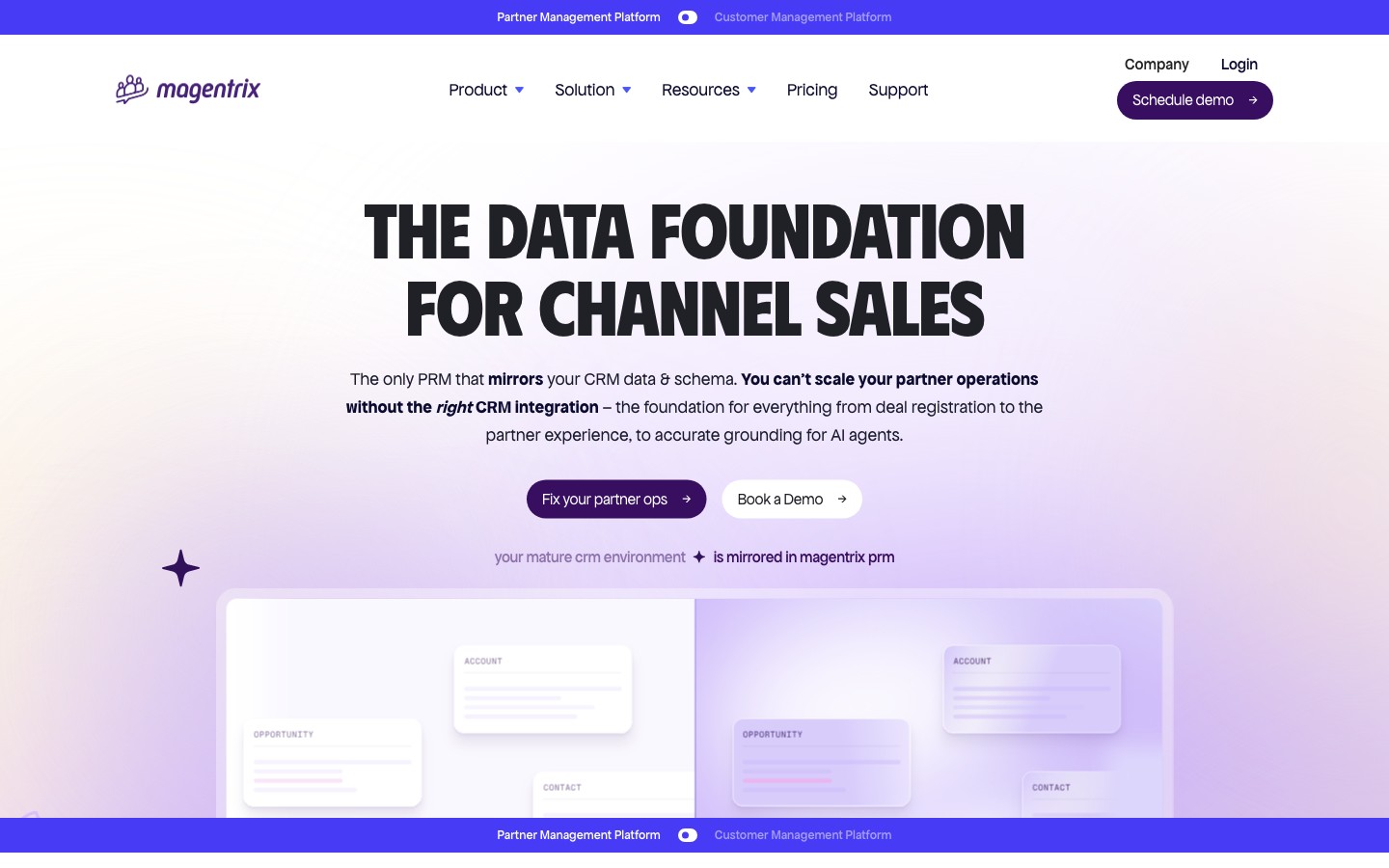
Best PRM for: mid-market to enterprise teams (especially Salesforce, HubSpot, or MS Dynamics shops) that need a highly customizable portal for complex workflows and CRM environments. Not ideal for: small teams that want “launch in an afternoon” simplicity — the depth of options can overwhelm.
- Strengths: extensive no-code point-and-click customization plus a developer IDE/CLI and API-first PaaS for building beyond the box; mirrors your CRM schema directly (Salesforce, HubSpot, Dynamics) instead of field-mapping, which suits complex CRM environments; deal registration, native LMS, MDF, gamification; enterprise-grade security (ISO 27001, SOC 2 Type II).
- Trade-offs: storage limits on lower tiers; configuration depth is a lot for small teams.
- Pricing: Essentials starts around $1,500/month (billed annually; monthly billing adds ~10%); Advanced and Unlimited tiers scale up from there.
- Bottom line: the best PRM software for Salesforce or Dynamics shops that need deep, no-code customization and can invest the configuration time.
Learn more: Magentrix
Introw
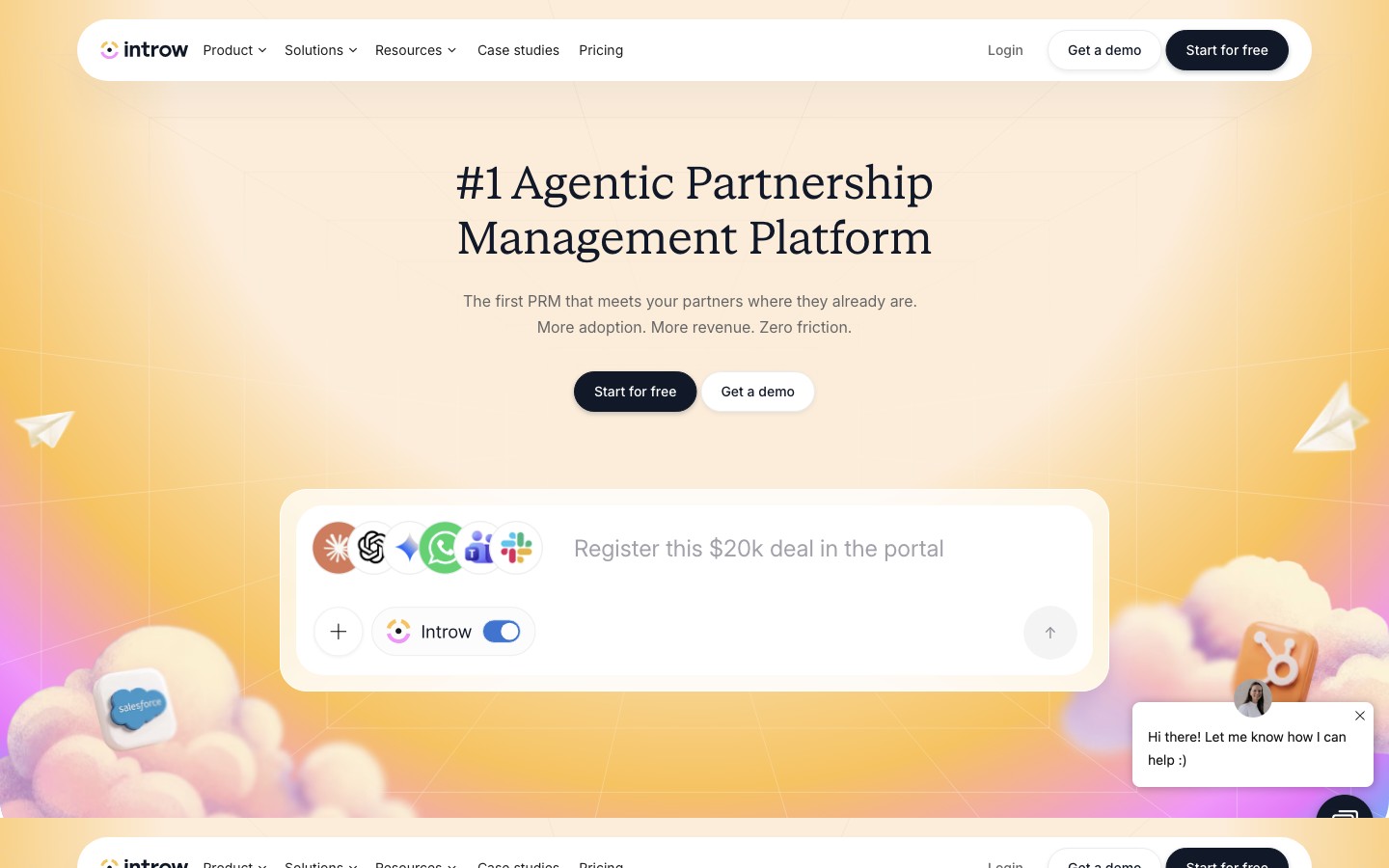
Best PRM for: mid-to-upper-market teams that want an AI-native, CRM-native PRM they can run “headless” — from inside their CRM, Slack, Teams, or even an AI assistant — with a real branded portal available when they need one. Not ideal for: very small teams that want the simplest, lowest-configuration setup, or large enterprises that need deep TCMA and global-channel governance.
- Strengths: brands itself as the “Agentic PRM” — AI-native throughout, with two-way CRM sync (HubSpot, Salesforce) at the core so the CRM stays the source of truth; a no-code branded portal plus headless collaboration in Slack/Teams/AI; a free Starter plan (one partner) to try it on your own CRM data; fast to launch.
- Trade-offs: more capability (and configurability) than a very small program needs; beyond the one-partner free Starter, paid pricing is quote-based and tends to run higher than entry-level SMB tools.
- Pricing: a genuinely free Starter plan (one partner, with HubSpot/Salesforce CRM integration and deal registration); paid Pro, Scale, and Enterprise tiers are tier-based on partner count and aren’t publicly listed (quote-based). HubSpot is included on every plan; Salesforce comes in on the higher tiers.
- Bottom line: worth a look for mid/upper-market teams that want an AI-native, CRM-native PRM that meets partners where they already work, with a portal on hand when needed — and the free Starter plan makes it easy to try on your own CRM data first.
Learn more: Introw
Salesforce PRM
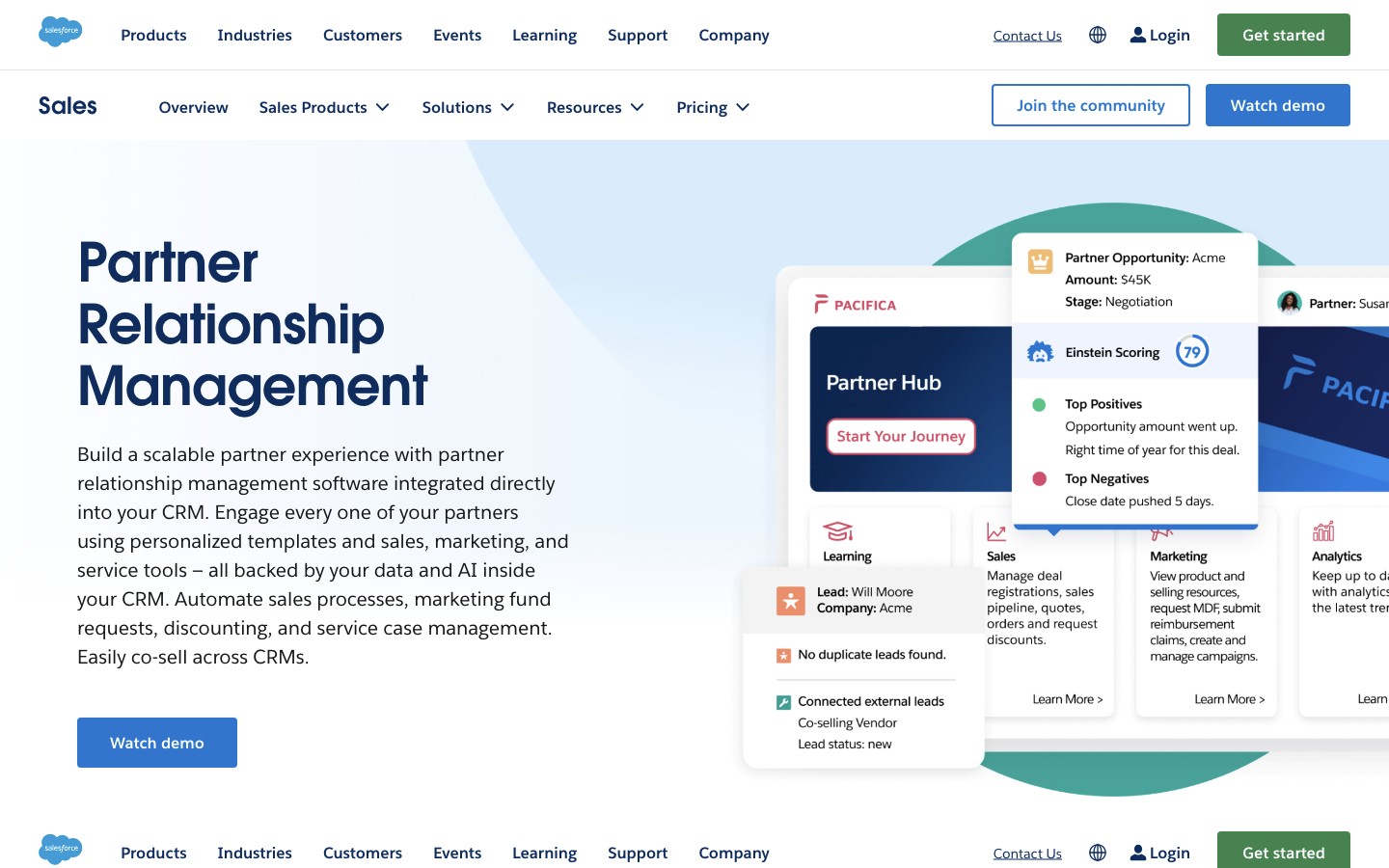
Best PRM for: teams that want partner workflows inside Salesforce (and have the Salesforce admin horsepower to support it). Not ideal for: teams that want a modern partner experience without heavy CRM customization.
- Strengths: native Salesforce data + automation + reporting; great when internal workflows are already Salesforce-standardized.
- Trade-offs: partner UX can feel “Salesforce-y”; customization and maintenance burden is real.
- Pricing: roughly $25 per partner member/month (billed annually), on top of your core Salesforce licensing.
- Bottom line: the best PRM software if you’re all-in on Salesforce and have the admin resources to build and maintain partner workflows inside it.
Learn more: Salesforce PRM
ZINFI
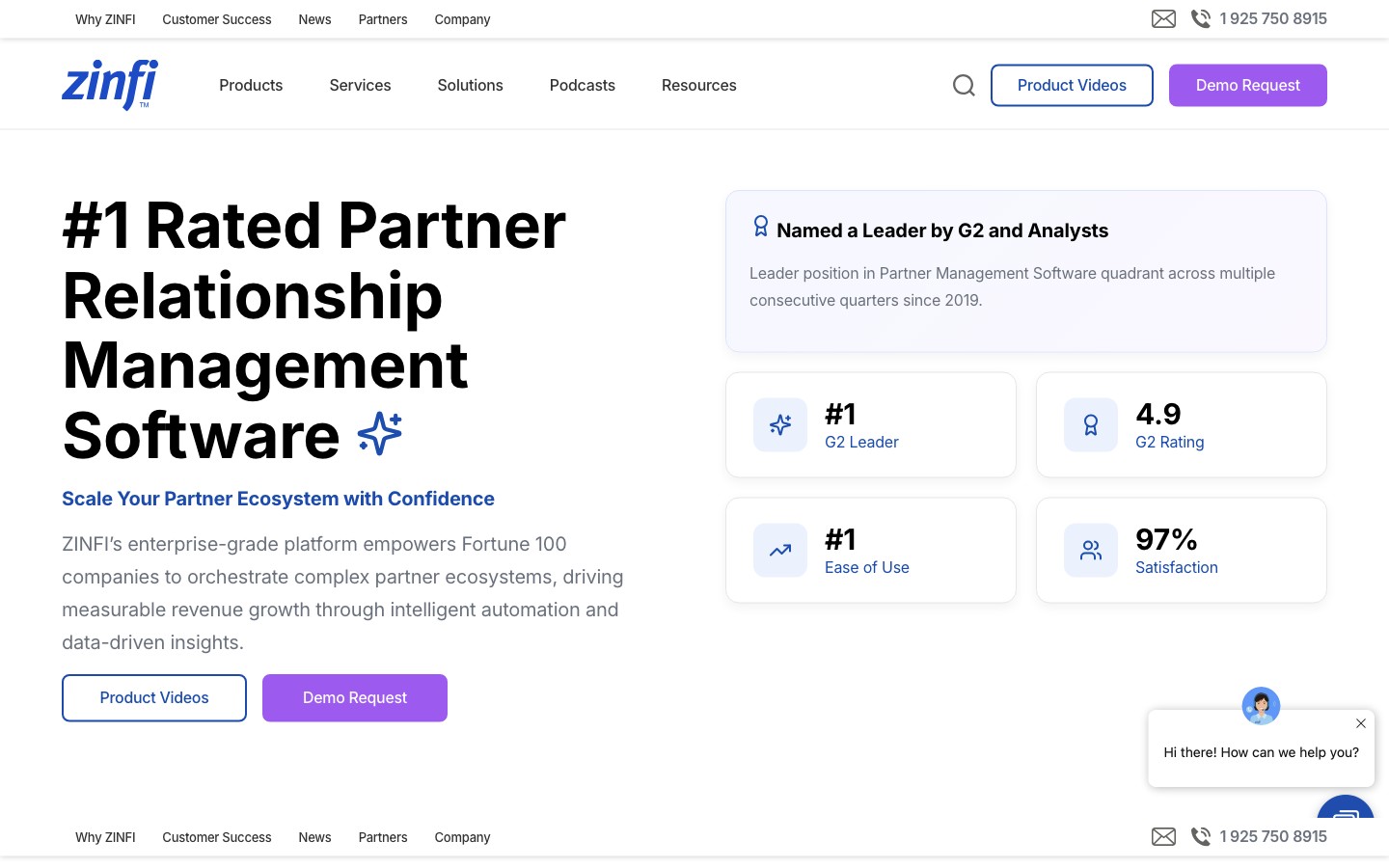
Best PRM for: enterprise channel automation across a large partner ecosystem, especially where through-channel marketing (TCMA) matters. Not ideal for: SMBs or teams optimizing for simplicity.
- Strengths: broad all-in-one suite (PRM + partner marketing + sales management); strong multi-language/multi-currency support.
- Trade-offs: high learning curve on the most advanced modules; enterprise pricing and implementation.
- Pricing: custom, quote-based; typically starts around $20k/year.
- Bottom line: the best PRM software for enterprises that want PRM plus through-channel marketing (TCMA) across a large, global partner ecosystem.
Learn more: ZINFI
Impartner
Best PRM for: large, structured channel programs that need governance, automation, and scale. Not ideal for: small teams that want speed and simplicity.
- Strengths: deep channel automation across the full partner lifecycle; strong incentives, MDF, and structured partner tiers; built for “partner ops” as a real function.
- Trade-offs: implementation and configuration can be substantial; overkill if your program is still proving the motion.
- Pricing: custom, quote-based; AppExchange editions commonly start around $25k/year.
- Bottom line: the best PRM software for large, structured channel programs that need governance, incentives, and MDF at scale.
Learn more: Impartner
Allbound / ChannelScaler
Best PRM for: mid-market-to-enterprise channel programs that need enablement, co-sell, and deep incentive automation (rebates, SPIFFs, MDF, distributor credits) across multi-tier ecosystems. (Allbound acquired Channel Mechanics in 2024, and the combined company rebranded to ChannelScaler in 2025.) Not ideal for: ultra-lightweight programs or teams that want self-serve setup with minimal admin work.
- Strengths: now positioned as an enterprise AI PRM built for multi-tier ecosystems and indirect revenue models; strong incentive and channel-program automation (rebates, SPIFFs, MDF, distributor back-end credits); named a Leader in PRM by IDC MarketScape.
- Trade-offs: as a recently merged and rebranded product, roadmap and pricing are still stabilizing; more platform (and admin) than a small program needs.
- Pricing: custom, quote-based; commonly in the $20k–$40k/year range.
- Bottom line: the best PRM software for mid-market-to-enterprise channel programs that want deep incentive automation and structured collaboration across a multi-tier ecosystem.
Learn more: ChannelScaler
Unifyr

Best PRM for: enterprise channel programs that want PRM plus through-channel marketing (TCMA) and partner enablement in one suite. (Zift Solutions rebranded to Unifyr in 2024; the ZiftONE product is now Unifyr One.) Not ideal for: SMBs or teams that want a lightweight, fast-to-launch tool.
- Strengths: mature enterprise PRM + TCMA + partner-marketing suite with partner learning management; a recognized leader in enterprise channel management.
- Trade-offs: enterprise pricing and implementation; more platform than most SMB/mid-market programs need.
- Pricing: custom, quote-based; enterprise-tier.
- Bottom line: the best PRM software for enterprises that want a mature PRM + TCMA + partner-marketing suite in a single platform.
Learn more: Unifyr
What “good PRM software” looks like in 2026 (features that actually matter)
Ignore long feature lists. Most buyers care about:
- Partner onboarding that actually gets used (not a portal graveyard)
- Deal/lead registration that matches how you sell
- CRM integration depth — what syncs, how reliably, how configurable, and which CRMs
- Enablement content (resources, announcements, training — at least the basics)
- Reporting you can trust (partners, leads, pipeline, revenue attribution where applicable)
- Time-to-value — how fast you can launch without a services project
Tools we deliberately didn’t rank (and why)
To keep this an honest PRM comparison, we left out tools that aren’t really PRMs — even though they show up on some “best PRM” lists to inflate the count:
- Affiliate-only platforms (Rewardful, Tapfiliate, Refersion, LeadDyno): great for high-volume affiliate/referral link tracking, but they lack full B2B PRM workflows (deal registration, partner tiers, structured portals). Different category.
- Ecosystem / co-sell data tools (Crossbeam, Reveal): excellent for account mapping and co-selling, but they complement a PRM rather than replace one — they don’t manage onboarding, portals, or deal registration.
- General work platforms (monday.com, Airtable): flexible enough to build a DIY partner tracker, but you’re building and maintaining the PRM yourself.
If your need is genuinely affiliate-link tracking or account mapping, one of the above may be the right tool — it just isn’t a PRM.
Suggested next steps
- If you’re on HubSpot or Salesforce, native support is nearly universal — so choose on program size, features, and price, not the integration. See the best PRM for HubSpot and best PRM for Salesforce guides.
- If you’re on Pipedrive, Zoho, or Attio and need a partner portal, start with the native integration — this is where PartnerPortal has the widest edge. See the per-CRM guides in Related reading below for which tools integrate natively vs. only via Zapier.
- If you’re comparing SMB PRMs head-to-head, look at how PartnerPortal stacks up against Kiflo and JourneyBee specifically.
- If you’re running an enterprise channel, shortlist Impartner and Salesforce PRM, then validate implementation reality before you commit.
Related reading
- Best PRM for HubSpot and Best PRM for Salesforce — for the two CRMs nearly every PRM supports natively, how to choose on program size, features, and price rather than the integration itself.
- Best PRM for Pipedrive, Best PRM for Zoho, and Best PRM for Attio — the native-vs-Zapier breakdown for each CRM.
- Most Affordable PRM Software in 2026 — the tools ranked by real cost, plus the hidden fees to watch for.
- What Is Channel Management? — the full partner-channel lifecycle, from strategy through optimization.
- Best Partnership Trackers in 2026 — how teams track partner-sourced pipeline, and the tools that do it best.
- Partner Directory: What It Is, and How to Build One — the public, buyer-facing side of a partner program, and which PRMs include one.
Ready to see it for yourself? Claim your portal or explore the CRM integrations.
Frequently asked questions
What does PRM software stand for?
PRM stands for Partner Relationship Management software — tools for running partner programs, tracking partner-sourced deals, and managing partner onboarding, enablement, and performance.
Do I need a PRM if I already have a CRM?
If partners matter to revenue, usually yes. CRMs are built for direct sales. A PRM is built for partner workflows (onboarding, deal registration, portals, enablement, partner reporting). A good PRM integrates with your CRM rather than replacing it.
Should I choose a portal-based PRM or a CRM-first PRM?
Choose portal-based when partners will actually use a portal (resources, submissions, visibility). Choose CRM-first (Slack/email delivery) when partners won't log in and collaboration happens in your CRM and messaging tools.
How much does PRM software cost?
It varies widely by features, partner count, and internal users. Affiliate-only tools run roughly $50–$300/month. SMB and mid-market PRMs run roughly $250–$2,000/month. Enterprise platforms run roughly $20,000–$150,000+/year, often plus implementation.
How long does it take to implement a PRM?
This is the biggest split between legacy and modern tools. Enterprise platforms (Salesforce PRM, Impartner, ZINFI) are real projects that can take weeks to months and often need consultants. Modern SMB and mid-market tools (PartnerPortal, Kiflo, JourneyBee) are designed to launch in days — sometimes the same day.
Is there a free PRM option?
Yes, though what 'free' buys you varies. PartnerPortal offers a genuinely free tier — not a time-limited trial — so you can launch a real partner portal and run a full program without paying. Introw also has a free Starter plan, but it's capped at a single partner. Most other PRMs on this list offer only a demo or a short free trial, and affiliate-focused tools sometimes have low-cost entry plans. If a free starting point matters, confirm whether it's a real free plan and what partner cap applies.
Which PRMs integrate natively with which CRMs?
As a rough guide: Salesforce and HubSpot are supported by almost every tool here (Salesforce PRM is Salesforce-native by definition). Pipedrive has far fewer native options — PartnerPortal and JourneyBee are the main SMB ones, with Introw, Euler, and (at the enterprise end) ZINFI also offering native connectors. Zoho is rarer still; PartnerPortal, JourneyBee, and ZINFI support it natively, while other tools only connect via Zapier rather than a true native integration. Attio is the newest and least common; PartnerPortal and JourneyBee are among the few offering native support. Always confirm the depth — one-way vs. two-way sync and which objects — on the vendor's site, since 'integration' can mean anything from a full native sync to a Zapier hop.
What's the best PRM for HubSpot or Salesforce?
Almost every PRM on this list integrates with Salesforce and HubSpot, so the real question is how much customization you need. If your needs are relatively low — a clean portal, deal registration, standard two-way sync — fast-to-launch tools like PartnerPortal, Kiflo, or JourneyBee are strong fits. If you need high customization and deep, org-specific workflows, look at Salesforce PRM or Magentrix (for Salesforce/Dynamics), or an enterprise suite like Impartner. For HubSpot specifically, PartnerPortal and Kiflo offer native two-way sync with quick setup.
What's the best PRM for startups and SMBs?
Startups and SMBs are usually best served by a PRM that launches fast, has transparent pricing, and doesn't require a services project — PartnerPortal and Kiflo are the clearest fits. PartnerPortal also offers a free tier, so a small program can go live without budget approval. Enterprise platforms like Impartner, ZINFI, or Unifyr are overkill (and overpriced) for a program that's still proving the motion.
What is deal registration?
Deal registration is the process where a partner submits a lead or opportunity they're working so it's tracked, credited, and protected from channel conflict. It's a core PRM feature — it ties partner-sourced pipeline back to the right partner for reporting and commissions. If deal or lead registration matches how you sell, make sure any PRM you evaluate supports it in a way that fits your motion.
Do PRMs handle partner commissions and payouts?
Many do, but the depth varies. PartnerPortal supports flexible commissions and partner tiers, while PartnerStack is built around automated commission payouts at scale (with a percentage fee on payouts). Enterprise suites add incentives, MDF, and rebates. If automated payouts are central to your program, confirm exactly how each tool calculates and pays commissions before you commit.
Can one PRM manage referral, reseller, and affiliate partners together?
Yes — the better PRMs are built to run multiple partner motions (referral, reseller, and affiliate) in one system rather than forcing a separate tool per motion. PartnerPortal and PartnerStack both handle blended programs. Affiliate-only platforms, by contrast, track links well but lack the B2B workflows (deal registration, partner tiers, structured portals) that reseller and channel programs need.
What's the difference between a partner portal and a PRM?
A partner portal is the partner-facing front end — where partners log in to find resources, register deals, and see their performance. A PRM (partner relationship management) is the broader system behind it, including the operator workflows, CRM integration, reporting, and automation. A portal is one part of a PRM; some CRM-first tools deliberately minimize the portal in favor of Slack or email delivery.