
JourneyBee vs PartnerPortal (2026): A Side-by-Side Comparison
JourneyBee vs PartnerPortal compared — CRM integrations, AI, partner LMS, deal registration, pricing, and reviews. AI/headless Buzz vs free-tier accessibility — CRM breadth, LMS, pricing, and reviews to help you choose.
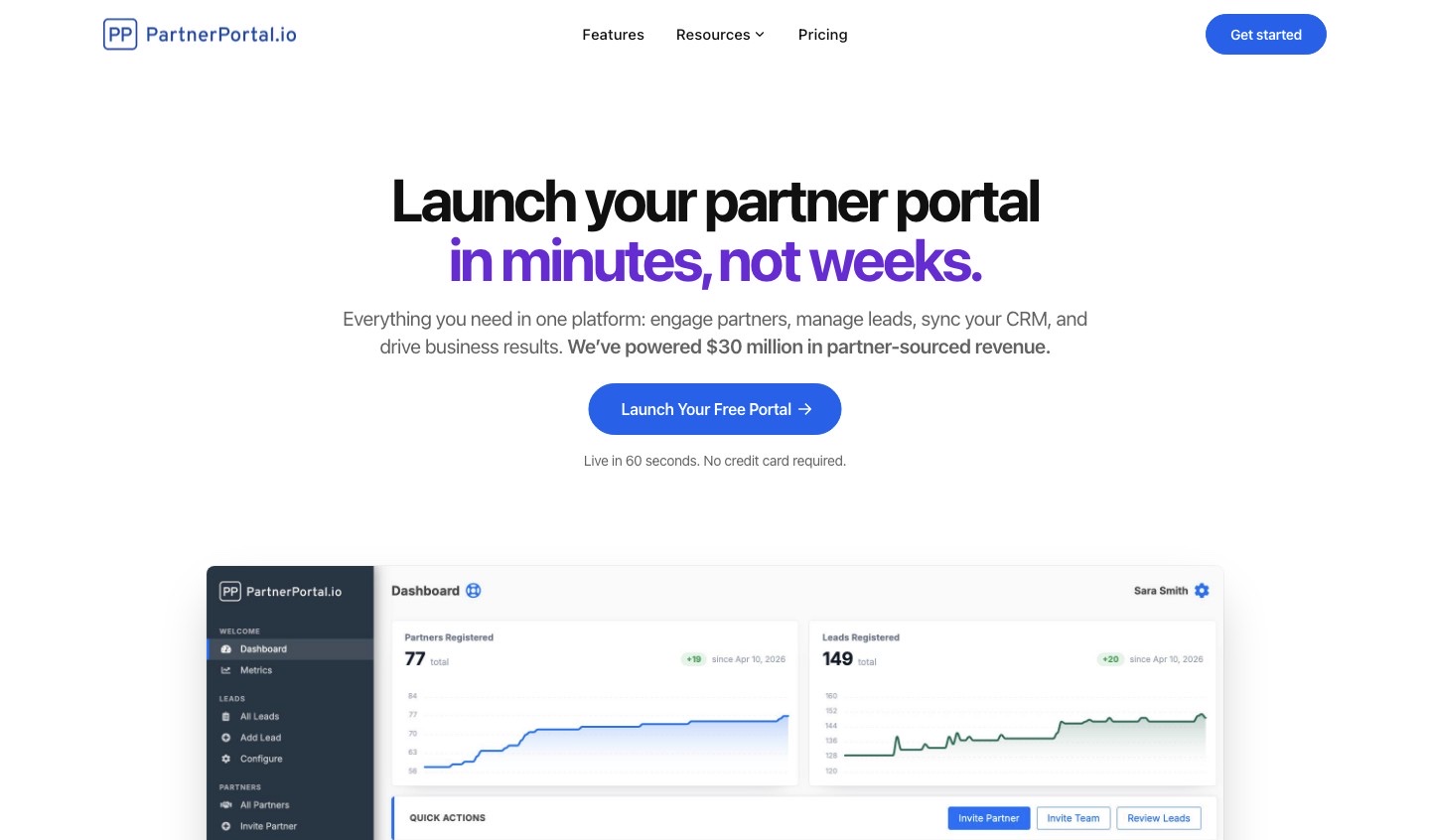
JourneyBee and PartnerPortal overlap more than most PRM pairs: both ship broad native CRM sync and a built-in LMS. The split is emphasis and maturity — JourneyBee bets on AI, headless Slack/Teams deal reg, MDF, and dual SOC2/ISO; PartnerPortal bets on a free tier, lower price, Zoho, and a longer track record. Facts below; no declared winner.
Full disclosure: PartnerPortal publishes this comparison, and PartnerPortal is a JourneyBee competitor. We’ve worked to keep this fair and factual — stating what each tool does and letting you draw the conclusion — rather than steering you toward us. Where the facts favor JourneyBee, we say so.
First, a useful signal: if you’ve narrowed your search to JourneyBee and PartnerPortal, you’re comparing two products in the same SMB and mid-market, non-enterprise segment — modern B2B SaaS teams that want a partner portal live fast, with broad native CRM sync and built-in training, not a multi-month enterprise rollout. The two overlap heavily on the fundamentals, but their focuses diverge more than some pairs: JourneyBee pushes toward AI-driven, off-portal ecosystem orchestration, while PartnerPortal optimizes for accessible, straightforward program operations. It would be a different exercise entirely to weigh either against an enterprise platform like PartnerStack, Impartner, or ZINFI. For that wider view, see our best PRM software roundup.
TL;DR: Both are modern PRMs that share the core feature set — and, unusually, both have broad native CRM coverage and a built-in partner LMS, so those aren’t the dividing lines here. The real differences are emphasis and maturity. JourneyBee leans into AI (its Buzz agent), a headless / “off-portal” model (register deals from Slack, Teams, or email), MDF, two-tier distribution, and dual SOC 2 Type 2 + ISO 27001 security — but it’s a very young company (founded 2023) with a thin review base. PartnerPortal leans into accessibility — a permanently free tier you can launch in about 60 seconds, a lower price (its top plan sits below JourneyBee’s entry), automated commission & revenue tracking (Stripe/QuickBooks), native Zoho coverage, and a longer track record with a larger review base. Neither is per-partner-priced at the top of its range.
At a glance
| JourneyBee | PartnerPortal | |
|---|---|---|
| Best known for | AI-native, headless PRM for complex ecosystems | Broad native CRM coverage + free entry point |
| Native CRM integrations | Salesforce, HubSpot, Pipedrive, Attio (+ Zoho guide) | HubSpot, Salesforce, Pipedrive, Zoho, Attio |
| Off-portal (Slack/Teams/email) | Yes | No (portal-based) |
| Built-in LMS + certifications | Yes (+ quizzes & graded assessments) | Yes (courses, lessons, completion) |
| AI features | Buzz agent (MCP-native) | Light |
| MDF management | Yes | Not a focus |
| Reseller / multi-tier | Yes (two-tier distributor) | Referral/affiliate-first; lighter |
| Free tier | No | Yes (permanently free) |
| Starting price | ~$499/mo (unlimited partners) | Free, then $249/mo |
| Time to launch | Fast setup (no free tier) | ~60 seconds, free, self-serve (no credit card) |
| Partner payments | Pays via XTRM | Doesn’t pay — tracks & exports commissions (Stripe/QuickBooks revenue capture) |
| Security | SOC 2 Type 2 + ISO 27001 | Confirm current certifications |
| Company / track record | Stockholm, founded 2023 (young) | 5+ years in market |
| G2 rating | 4.7 / 5 (~25 reviews) | 4.5 / 5 (52 reviews) |
Both cover the same core PRM ground for the same kind of buyer, and — unlike many comparisons — both bring broad native CRM sync and a built-in LMS. The table above surfaces where they actually diverge: AI and off-portal engagement, MDF and multi-tier distribution, pricing model, security posture, and company maturity. The sections below unpack each.
Overview of each
JourneyBee is a PRM for modern B2B SaaS, cybersecurity, and AI companies, built around two ideas: it’s “AI-native” (centered on its Buzz agent) and “headless” (partners can register deals and collaborate from Slack, Teams, or email instead of a portal). On top of core PRM it adds a built-in LMS with assessments, MDF, digital sales rooms, and two-tier distributor management. It’s typically chosen for heavier AI/automation, off-portal engagement, complex multi-type ecosystems, and its strong security certifications. For a full breakdown, see our JourneyBee PRM overview.
PartnerPortal is a PRM for SMB and mid-market teams that want a partner portal live quickly — and free to start. It covers the same core ground (portal, lead and deal registration, commissions, a built-in LMS) with an emphasis on broad native CRM coverage (five CRMs, including Zoho), automated commission & revenue tracking (connect Stripe or QuickBooks to capture customer revenue and calculate what partners are owed), and a permanently free tier. It’s typically chosen for teams that want to launch without budget approval, that need native Zoho sync, or that value a longer track record. For the wider field, see best PRM software.
Brand & market position
Same buyer band — very different ages and risk profiles.
- JourneyBee is an early-stage startup based in Stockholm, Sweden, founded in 2023 by Fredrik Mellander (CEO, who built partner ecosystems at companies like Teamtailor) with co-founders in Poland. It’s a small, fast-moving, security-conscious team betting on an AI-forward, headless roadmap — and, notably for its size, it holds dual SOC 2 Type 2 + ISO 27001 certification.
- PartnerPortal is a PRM that’s been in market for 5+ years, positioned as one of the first self-serve PRMs. It focuses on fast, self-serve launch, broad native CRM integration, and affordability, and continues to ship new CRM integrations and features (including a recently launched built-in LMS and certifications).
On user reviews, both are well-rated — JourneyBee around 4.7/5 on G2 and PartnerPortal around 4.5/5 — but the shape of the evidence differs. JourneyBee’s rating is strong on a young, thin base (~25 G2 reviews; it also advertises 4.8 on Gartner Peer Insights), reflecting its 2023 founding. PartnerPortal has a larger review base (52 G2 reviews; 4.8 on SpotSaaS across 45) built over more years in market. We cover the numbers in Reviews & ratings below.
Feature comparison
CRM breadth and LMS are shared — so the table’s interesting rows are AI/headless, MDF, two-tier distribution, Zoho, and who pays out how. Subsections unpack those.
| Feature | JourneyBee | PartnerPortal |
|---|---|---|
| Branded partner portal | Yes | Yes |
| Partner onboarding | Yes (adaptive journeys) | Yes |
| Lead & deal registration | Yes | Yes |
| Off-portal registration (Slack/Teams/email) | Yes | No (portal-based) |
| Commission tracking | Yes (pays via XTRM) | Yes (revenue tracking via Stripe/QuickBooks; exports) |
| Rep-level SPIFFs | Yes | Flexible commissions & tiers |
| MDF management | Yes | Not a focus |
| Sends partner payments | Yes (via XTRM) | No — exports for finance |
| Partner tiers & segmentation | Yes | Yes |
| Built-in LMS (course delivery) | Yes | Yes |
| LMS quizzes & graded assessments | Yes | Roadmap (not yet) |
| Certifications | Built-in (badged) | Built-in (automatic + manual, badged) |
| Resource center / assets | Yes | Yes |
| Announcements | Yes | Yes (emailable, segment by group) |
| Reseller & multi-tier distribution | Yes (two-tier distributor) | Lighter (referral/affiliate-first) |
| AI assistant | Yes (Buzz, MCP-native) | Light |
| Digital sales / deal rooms | Yes | Not a focus |
| Security certifications | SOC 2 Type 2 + ISO 27001 | Confirm |
| Per-seat / per-partner fees | Unlimited partners (billed by users) | No |
Partner portal & ease of use
Both tools center on a branded, self-serve partner portal, and both are designed to launch in days, not months — reviewers of each cite fast setup as a strength. Two nuances: JourneyBee emphasizes hyper-personalized portals (a drag-and-drop template editor per partner type, embeddable into your CRM or product) and adaptive onboarding journeys that show each partner only relevant steps. PartnerPortal emphasizes the lowest-friction start of the two — a permanently free tier you can launch in about 60 seconds, with no credit card and no sales call, so you can stand up a real portal without procurement; JourneyBee has no free tier, so evaluating it means engaging on a paid plan. Both are genuine ease-of-use products; the deciding factors below matter more than portal basics.
Deal registration & off-portal selling
Both support lead and deal registration with partner attribution and an approval workflow — the mechanism that prevents “who got there first” channel conflict — and both sync natively to your CRM. The distinctive difference is JourneyBee’s headless / off-portal model: partners can register deals, share leads, and request MDF directly inside Slack, Microsoft Teams, or email, without logging into a portal, which JourneyBee pitches as the cure for “portal fatigue.” PartnerPortal is portal-based: partners register in the portal, and on approval PartnerPortal creates the Deal (plus Person and Company records) in whichever of its five native CRMs you use, then syncs deal updates back to the portal. If off-portal, in-the-flow-of-work registration is important to you, that’s JourneyBee’s design; if a clean portal-plus-native-CRM flow is what you want, PartnerPortal covers it.
Commissions, incentives & MDF
Both automate partner commissions and remove spreadsheet reconciliation, and both support tiers so different partner groups earn on different models. The differences:
- JourneyBee runs commissions through a rules-based engine (revenue share, tiered, flat-fee, recurring, and rep-level SPIFFs paid to an individual person), with payouts through its integrated provider XTRM. It also offers dedicated MDF (market development funds) management — tiered budgets, approval workflows, claims, and closed-loop ROI attribution from your CRM.
- PartnerPortal offers flexible commission structures and tiers, plus revenue tracking: connect Stripe or QuickBooks and it captures charge-level customer revenue from partner-sourced deals and calculates commissions owed automatically, then runs an approve → export → mark-paid workflow with AP-ready exports finance pays from. It doesn’t move money itself, and MDF is not a focus.
If MDF or rep-level SPIFFs are central to your program, JourneyBee has built more there — and note JourneyBee actually pays partners (routing payouts through XTRM, which recipients register with). If tying commissions to actual billed revenue via native Stripe/QuickBooks capture matters more, that’s PartnerPortal, which exports commissions for your finance team to disburse rather than sending funds itself.
Partner enablement & training
This is a parity area with a depth nuance — both have a genuine built-in LMS, which is unusual for SMB PRMs.
- PartnerPortal includes a built-in LMS: courses made of ordered lessons (rich content, embedded video, attachments), access controlled by partner group, a course player with progress and completion tracking, and per-partner engagement history. Certifications are built in — awarded automatically when a partner completes the required courses, or granted manually.
- JourneyBee also has a built-in LMS, and today it goes deeper on assessment: quizzes, graded final assessments, configurable passing scores and attempt limits, and learning paths, with certifications and shareable digital badges. It can also generate “micro-LMS” units from product docs with AI.
So both let you deliver structured training inside the portal and award certifications. The difference is that JourneyBee currently offers quiz/assessment-based certification (test that partners absorbed the material), whereas PartnerPortal’s LMS is completion-based today, with quizzes on its roadmap. If graded assessments are essential now, that favors JourneyBee.
Reseller & multi-tier support
Both run referral and affiliate motions well. Resellers and distribution are where they differ:
- JourneyBee supports two-tier distribution — a distributor overseeing a network of resellers, with leads attributed down to the reseller that owns the deal. (It’s a JourneyBee-managed feature you enable through their team rather than a self-serve toggle.) Combined with its cybersecurity-channel focus (VARs, MSPs, MSSPs), it’s built for more complex channel shapes.
- PartnerPortal is referral- and affiliate-first. It supports reseller programs, but multi-tier distribution and complex distributor hierarchies aren’t its focus.
For flat referral or single-tier reseller programs, either works. JourneyBee pulls ahead when two-tier distributor hierarchies and MDF are part of the design.
AI & automation
This is JourneyBee’s clearest area of emphasis. JourneyBee centers on Buzz, an agentic AI assistant built on the Model Context Protocol (MCP) and model-agnostic (able to draw on models like Claude, GPT-4o, or Gemini). Buzz assists with deal registration, lead routing/matching, generating portal and training content, answering partner questions, and turning documentation into micro-LMS units — backed by a rules-based automation engine that chains events (e.g., a completed certification upgrades a tier, which unlocks a higher commission rate). PartnerPortal is comparatively light on native AI, focusing its investment on core PRM workflows and native CRM breadth. If native AI is a priority, JourneyBee leads here today; if it isn’t, this won’t be a deciding factor.
Security & compliance
JourneyBee markets dual SOC 2 Type 2 + ISO 27001 certification as a differentiator, and positions itself among a small group of PRMs holding both — a meaningful signal for security-conscious buyers (notably in cybersecurity channels). For PartnerPortal, confirm current certifications directly if formal compliance attestations are a hard requirement for your procurement. This is one area where a documented, verifiable certification is worth checking against your specific security review.
Integrations
Unlike some comparisons, native CRM breadth is close to a wash here — both are strong. The differences are at the edges.
| Category | JourneyBee | PartnerPortal |
|---|---|---|
| Native CRM | Salesforce, HubSpot, Pipedrive, Attio (+ Zoho guide) | HubSpot, Salesforce, Pipedrive, Zoho, Attio |
| No-CRM / standalone | Yes (system of record) | Portal-based |
| Communication | Slack, Teams, Gmail, Outlook (off-portal) | Slack |
| Payments / accounting | XTRM (integrated payout provider) | Stripe, QuickBooks (revenue tracking); exports, doesn’t pay |
| Automation / custom | REST API (API-first) | Zapier, API |
The headline: both cover Pipedrive and Attio natively, so if that’s your CRM, either works without middleware — a real point of similarity. PartnerPortal lists Zoho as a first-class native integration, where JourneyBee documents a Zoho integration in its help center. JourneyBee adds standalone (no-CRM) operation and Slack/Teams/email as first-class surfaces for its off-portal model; PartnerPortal centers on native CRM sync plus revenue tracking (Stripe/QuickBooks) for automatic commission calculation. For the CRM-specific landscape, see best PRM for Pipedrive, Zoho, and Attio.
Pricing
Both publish pricing — still relatively rare in PRM — and both effectively support unlimited partners at the top of their range, but the models and entry points differ.
| JourneyBee | PartnerPortal | |
|---|---|---|
| Free tier | No | Yes (permanent) |
| Entry paid plan | ~$499/mo (Standard) — up to 3 users, unlimited partners | $249/mo — up to 100 partners |
| Top published plan | Custom (Premium, Enterprise) | $399/mo — unlimited partners |
| Billing model | Per internal-user tier (partners unlimited) | Flat per tier |
| Per-seat fees | No (billed by user tier) | No |
Two things stand out factually. First, PartnerPortal has the lower entry point — a free tier, then $249/month — while JourneyBee’s published entry is around $499/month. Second, both avoid per-partner pricing: JourneyBee includes unlimited partners on every plan and bills by internal-user tier, and PartnerPortal’s $399/month plan is unlimited-partner. Notably, PartnerPortal’s top published plan ($399, unlimited) is priced below where JourneyBee’s paid plans start (~$499) — its ceiling sits under JourneyBee’s floor. One caveat: JourneyBee’s own pages cite inconsistent figures (anchors from $299 to $799 appear), so confirm current numbers. Teams optimizing purely on cost should also see our most affordable PRM software roundup.
Reviews & ratings
Both platforms are well-reviewed by users; the main differences are review volume and company age.
| Platform | JourneyBee | PartnerPortal |
|---|---|---|
| G2 | 4.7 / 5 (~25 reviews) | 4.5 / 5 (52 reviews) |
| Other | 4.8 on Gartner Peer Insights (vendor-cited) | 4.8 / 5 on SpotSaaS (45 reviews) |
JourneyBee’s ratings are strong but on a young, thin base — a direct consequence of its 2023 founding, so there’s simply less public history to draw on. PartnerPortal has a larger G2 review base built over more years in market. Both sit comfortably in the “well-liked by users” range; the practical read is that JourneyBee’s scores are encouraging-but-early, while PartnerPortal’s are backed by more volume and tenure. Read them yourself: JourneyBee on G2 and PartnerPortal on G2.
Considerations for your program
Decide on AI/headless and MDF appetite first; CRM is mostly a wash except Zoho:
- Your CRM is HubSpot, Salesforce, Pipedrive, or Attio. Both integrate natively and two-way. This factor is largely a wash; decide on the others.
- Your CRM is Zoho. PartnerPortal lists it as a first-class native integration; JourneyBee documents a Zoho integration in its help center. Confirm depth for your setup.
- You want the fastest, lowest-commitment start. PartnerPortal is self-serve and free to launch in about 60 seconds (no credit card, no demo required); JourneyBee has no free tier, so evaluating it means engaging on a paid plan.
- You want a free tier or the lowest entry price. PartnerPortal has a permanently free tier and a $249/month plan, and even its top $399/month plan is priced below JourneyBee’s ~$499 entry; JourneyBee’s published entry is around $499/month.
- Native AI is a priority. JourneyBee leads clearly here with its Buzz agent and AI-assisted LMS; PartnerPortal is light on native AI today.
- You want partners to register deals off-portal (Slack/Teams/email). That headless model is JourneyBee’s design; PartnerPortal is portal-based.
- Partner training with graded assessments matters now. Both have a built-in LMS; JourneyBee currently adds quizzes and graded assessments, while PartnerPortal’s LMS is completion-based with quizzes on the roadmap.
- You run MDF or multi-tier distribution. JourneyBee has dedicated MDF management and two-tier distributor support; PartnerPortal is referral/affiliate-first and doesn’t focus on MDF.
- Revenue-based commission tracking via Stripe/QuickBooks matters. That’s PartnerPortal (it captures customer revenue to calculate commissions, then exports for finance to pay). If you instead need the platform to actually disburse funds, JourneyBee pays partners through XTRM.
- Strong, documented security certifications are required. JourneyBee markets dual SOC 2 Type 2 + ISO 27001; confirm PartnerPortal’s current certifications for your procurement.
- You value a longer track record and larger review base. PartnerPortal has been in market longer with more reviews; JourneyBee is a promising but very young (2023) company.
- You need enterprise channel governance. Neither is a heavyweight enterprise suite — both target SMB/mid-market. Look instead at the enterprise options in our best PRM software roundup.
Related reading
- JourneyBee PRM: Features, Pricing & Reviews — the full deep-dive on JourneyBee.
- JourneyBee Alternatives — the wider field beyond these two.
- Kiflo vs JourneyBee — JourneyBee’s other close head-to-head.
- Kiflo PRM and Kiflo vs PartnerPortal — another close, SMB-focused competitor.
- Best PRM Software in 2026 — every major PRM, including enterprise options.
- Partner Relationship Management Platforms: Compare the Market — the full PRM landscape and every head-to-head in one place.
- Most Affordable PRM Software in 2026 — PRMs ranked by real cost.
- Best PRM for Pipedrive, Zoho, and Attio — native-vs-Zapier by CRM.
Comfortable with a 2023 vendor for Buzz AI — or want free tier + tenure instead? Try PartnerPortal free or review CRM sync.
Frequently asked questions
What is the main difference between JourneyBee and PartnerPortal?
Both are modern PRMs with broad native CRM coverage and a built-in partner LMS, so they overlap heavily. The difference is emphasis. JourneyBee leans into being 'AI-native' (its Buzz agent), a 'headless' model that lets partners register deals from Slack, Teams, or email, plus MDF management, two-tier distributor support, and dual SOC 2 Type 2 + ISO 27001 security. PartnerPortal leans into accessibility — a permanently free tier and a lower entry price — broad native CRM coverage including Zoho, automated commission and revenue tracking (via Stripe/QuickBooks), and a longer track record. JourneyBee is a very young company (founded 2023); PartnerPortal has been in market longer with a larger review base.
Are JourneyBee and PartnerPortal direct competitors?
Yes, though with somewhat different focuses. Both target the same segment — modern SMB and mid-market B2B SaaS teams that want a partner portal live fast, without an enterprise channel suite — and both offer broad native CRM sync and a built-in LMS. Where they diverge is orientation: JourneyBee pushes toward AI-driven, off-portal ecosystem orchestration (and complex channels like cybersecurity, with distributors and MSPs), while PartnerPortal optimizes for accessible, straightforward program operations. If you've shortlisted these two, you're still comparing like-for-like on the fundamentals.
Which is more affordable, JourneyBee or PartnerPortal?
PartnerPortal has the lower entry point: a permanently free tier and paid plans at $249/month (up to 100 partners) and $399/month (unlimited). JourneyBee's published entry plan is around $499/month for up to 3 internal users with unlimited partners — though its own pages cite inconsistent figures ($299 to $799). Both effectively support unlimited partners at the top of their range; the practical difference is PartnerPortal's free tier and lower starting price. Confirm current pricing on each vendor's site.
Do JourneyBee and PartnerPortal integrate with Pipedrive, Zoho, or Attio?
Both have broad native CRM coverage, which makes this close to a wash. PartnerPortal offers native two-way sync with HubSpot, Salesforce, Pipedrive, Zoho, and Attio. JourneyBee offers native two-way sync with Salesforce, HubSpot, Pipedrive, and Attio, with a Zoho integration documented in its help center, and can also run standalone with no CRM. If your CRM is Pipedrive or Attio, both integrate natively — unlike many SMB PRMs.
Which has better AI features, JourneyBee or PartnerPortal?
JourneyBee. AI is central to its positioning: its Buzz agent is built on the Model Context Protocol (MCP) and is model-agnostic, assisting with deal registration, lead matching, portal/room content, and turning documentation into micro-LMS training. PartnerPortal is comparatively light on native AI, focusing on core PRM workflows. If native AI is a priority for you, that's a clear point in JourneyBee's favor today.
Do both have a built-in partner LMS and certifications?
Yes — this is a parity area, with a depth nuance. PartnerPortal has a built-in LMS (courses, ordered lessons, group-gated access, a course player, and completion tracking) plus certifications awarded automatically on course completion or manually. JourneyBee also has a built-in LMS, and it currently goes deeper on assessment: quizzes, graded final assessments, configurable passing scores and attempt limits, and shareable digital badges. Both let you deliver training inside the portal; JourneyBee's assessment tooling is more built-out today.
Is PartnerPortal a good JourneyBee alternative?
For many JourneyBee shoppers, yes. Both are modern PRMs with broad native CRM coverage and a built-in LMS. PartnerPortal tends to fit teams that want a free or lower-cost start, automated commission and revenue tracking (via Stripe/QuickBooks), and a longer track record; JourneyBee tends to fit teams that want heavier AI, off-portal (Slack/Teams) engagement, MDF, two-tier distribution, or dual SOC 2 Type 2 + ISO 27001 security. See our full JourneyBee alternatives guide for the wider field.
Does either JourneyBee or PartnerPortal offer a free plan?
PartnerPortal offers a permanently free tier (not a time-limited trial), so you can launch a real partner portal without paying, with paid plans from $249/month. JourneyBee does not publish a permanently free plan; its entry Standard plan is around $499/month with unlimited partners.