
Kiflo vs PartnerPortal (2026): A Side-by-Side Comparison
Kiflo vs PartnerPortal compared — CRM integrations, deal registration, commissions, pricing, and reviews. An objective side-by-side of two modern SMB PRMs so you can decide which fits your program.
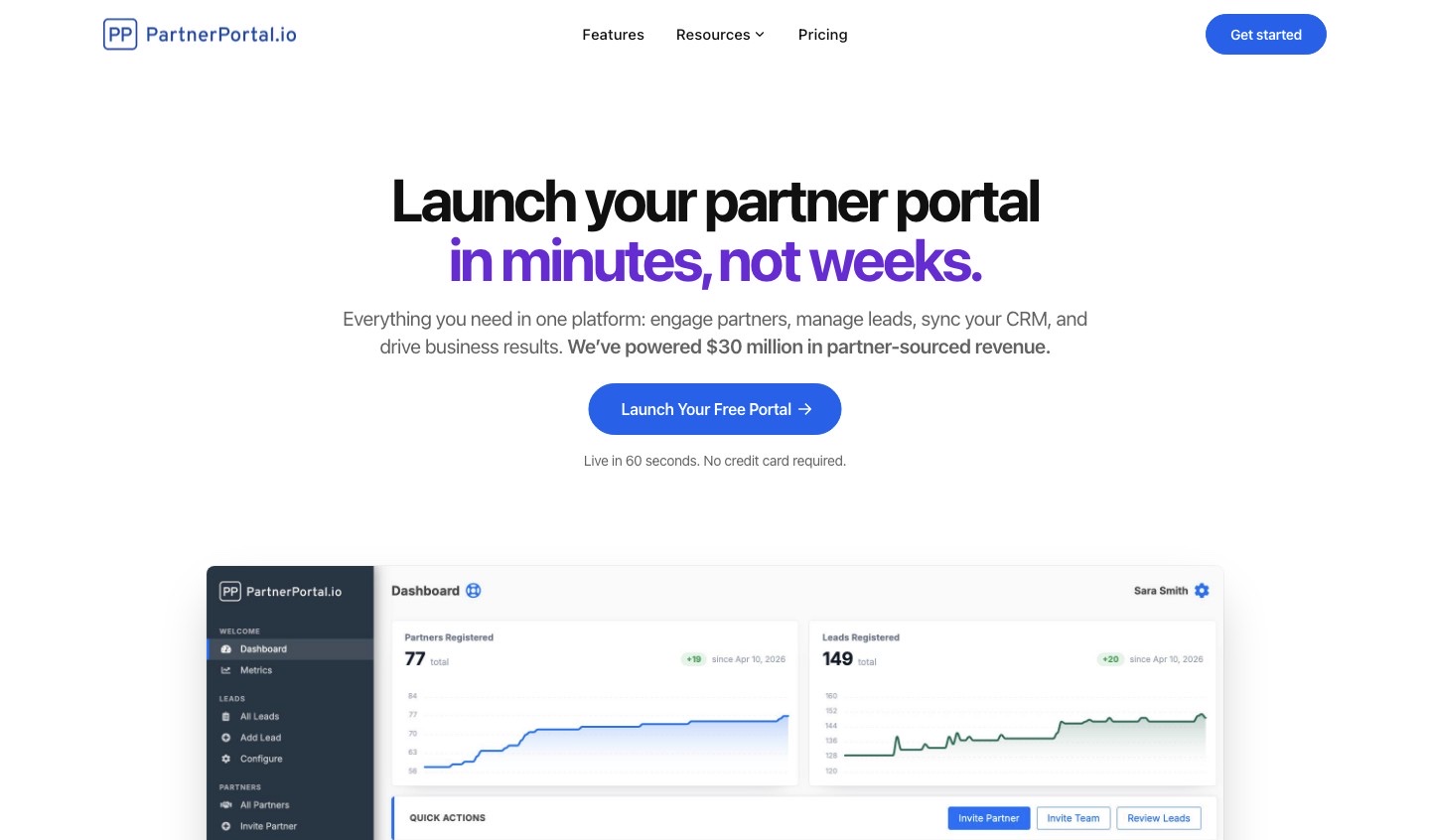
Kiflo and PartnerPortal compete for the same SMB/mid-market buyer: branded portal, lead/deal registration, commissions, CRM sync — no enterprise rollout. The real fight is CRM breadth and price model: PartnerPortal is native across five CRMs with a free tier; Kiflo is HubSpot/Salesforce-native from $399/mo and leans into account mapping and rewards. Side-by-side below — integrations, cost, features, reviews — with Kiflo’s strengths called out where they land.
Full disclosure: PartnerPortal publishes this comparison, and PartnerPortal is a direct Kiflo competitor. We’ve worked to keep this fair and factual — stating what each tool does and letting you draw the conclusion — rather than steering you toward us. Where the facts favor Kiflo, we say so.
First, a useful signal: if you’ve narrowed your search to Kiflo and PartnerPortal, you’re comparing two genuinely similar, directly competing products. Both target the SMB and mid-market, non-enterprise end of the PRM market: modern B2B SaaS teams running referral, reseller, and affiliate programs that want fast setup and transparent pricing, not a multi-month enterprise rollout. That’s a well-matched comparison. It would be a different exercise entirely to weigh either of these against an enterprise platform like PartnerStack, Impartner, or ZINFI, which serve larger, more complex channel organizations at much higher cost and complexity. For that wider view, see our best PRM software roundup.
TL;DR: Both are modern, well-reviewed SMB PRMs covering the same core feature set. The differences that tend to matter most: CRM coverage (PartnerPortal is native with five CRMs including Pipedrive, Zoho, and Attio; Kiflo is native with HubSpot and Salesforce only), pricing (PartnerPortal has a free tier and plans up to $399/month; Kiflo starts at $399/month for 25–50 partners with custom pricing above), and emphasis. Each leans a different way: PartnerPortal leans into accessibility — a permanently free tier you can launch in about 60 seconds, the lowest entry price, broad native CRM depth, and a built-in LMS and certifications; Kiflo leans into account mapping, co-sell, reseller/multi-tier distribution, and a deeper incentive/rewards engine. Kiflo has the longer track record and larger public review base. Neither leads on native AI.
At a glance
| Kiflo | PartnerPortal | |
|---|---|---|
| Best known for | Account mapping & co-sell on top of core PRM | Broad native CRM coverage + free entry point |
| Native CRM integrations | HubSpot, Salesforce | HubSpot, Salesforce, Pipedrive, Zoho, Attio |
| Other CRMs | Via Zapier / REST API | Via Zapier / API (fewer needed) |
| Free tier | No (free trial) | Yes (permanently free) |
| Starting price | $399/mo (Core, 25 partners) | Free, then $249/mo |
| Price ceiling | Custom (Plus & Premier) | $399/mo (unlimited) |
| Time to launch | Fast (free trial signup) | ~60 seconds, free, self-serve (no credit card) |
| Deal & lead registration | Yes | Yes |
| Commissions & revenue | Yes (Stripe, Chargebee; rep-level rewards) | Yes (flexible; Stripe/QuickBooks revenue tracking, exports) |
| Partner training | Certification tracking (external LMS via SSO) | Built-in LMS + certifications |
| Reseller / multi-tier | Yes (incl. distributor tiers) | Referral/affiliate-first; lighter reseller |
| Partner types | Referral, reseller, affiliate | Referral, affiliate, reseller |
| Ideal program size | Dozens to a few hundred partners | Dozens to a few hundred partners |
| G2 rating | 4.8 / 5 (100+ reviews) | 4.5 / 5 (~50 reviews) |
Both cover the same core PRM ground for the same kind of buyer. The table above surfaces where they actually diverge — CRM breadth, pricing model, and each product’s area of emphasis — which the sections below unpack.
Overview of each
Kiflo is a partner relationship management platform for B2B SaaS companies, run from a branded partner portal with onboarding, lead and deal registration, and commission automation. It now positions itself as a “partner revenue platform” that goes beyond core PRM into account mapping and co-sell. It’s typically chosen for its account-mapping/co-sell layer, its maturity across referral/reseller/affiliate motions, and its established track record. For a full breakdown, see our Kiflo PRM overview.
PartnerPortal is a PRM for SMB and mid-market teams that want a partner portal live quickly — and free to start. It covers the same core ground (portal, lead and deal registration, commissions) with an emphasis on broad native CRM coverage (five CRMs, including Pipedrive, Zoho, and Attio) and a permanently free tier. It’s typically chosen for teams on CRMs beyond HubSpot/Salesforce, or those that want to launch without budget approval. For the wider field, see best PRM software.
Brand & market position
Same segment — different cities and tenures.
- Kiflo is a founder-led, bootstrapped company based in Paris, France, founded in 2019 by Steven Muhr and Jérôme Thievent. It runs as a small team with a GDPR-first posture and transparent published pricing, and has built a substantial presence in the SMB PRM category over several years of active marketing.
- PartnerPortal is a PRM that’s been in market for 5+ years, positioned as one of the first self-serve PRMs. It focuses on fast, self-serve launch, broad native CRM integration, and affordability, and continues to ship new CRM integrations and features.
On user reviews, both are well-rated — Kiflo around 4.8/5 on G2 and PartnerPortal around 4.5/5 — but Kiflo has the larger public review base (100+ G2 reviews to PartnerPortal’s ~50). That gap reflects Kiflo’s longer stretch as a continuously, actively marketed standalone product more than a difference in satisfaction; we cover the numbers in Reviews & ratings below.
Feature comparison
Portal, registration, and commissions are table stakes for both — the interesting rows are CRM coverage, LMS, account mapping, and how each prices partners. Table first; nuance in the subsections.
| Feature | Kiflo | PartnerPortal |
|---|---|---|
| Branded partner portal | Yes | Yes |
| Partner onboarding | Yes | Yes |
| Lead & deal registration | Yes | Yes |
| Commission tracking | Yes | Yes |
| Rep-level SPIFFs / reward types | Yes (cash, credit, gift card, coupon) | Flexible commissions & tiers |
| Multi-currency revenue tracking | Via billing integrations | Yes (native capture) |
| Partner tiers & segmentation | Yes | Yes |
| Built-in LMS (course delivery) | No (external LMS via SSO) | Yes (courses, lessons, completion) |
| Certifications | Tracking only | Built-in (automatic + manual, badged) |
| Resource center / assets | Yes | Yes |
| Announcements | Yes | Yes (emailable, segment by group) |
| Automated / triggered emails | Yes (templates, custom domain, workflows) | Announcement emails only |
| Reseller & multi-tier distribution | Yes (incl. distributor tiers) | Lighter (referral/affiliate-first) |
| Account mapping & co-sell | Yes | Not a primary focus |
| Referral links | Yes | Yes |
| Per-seat fees | No | No |
Partner portal & ease of use
Both tools center on a branded, self-serve partner portal where partners onboard, register opportunities, access resources, and track rewards, and reviewers of both consistently cite ease of use and fast setup as strengths. On day-to-day portal usability, they’re evenly matched. The difference is in getting started: PartnerPortal is fully self-serve and free to launch — you can stand up a real branded portal in about 60 seconds, with no credit card and no sales call — whereas Kiflo starts with a free trial of a paid plan. If the lowest-friction way to go live and evaluate matters, that favors PartnerPortal.
Lead & deal registration
Both support lead and deal registration with partner attribution and an approval workflow, which is the mechanism that prevents “who got there first” channel-conflict disputes. The difference is where registrations flow: Kiflo syncs registered deals natively into HubSpot and Salesforce (channel conflict detection is available on its higher tiers). PartnerPortal creates the Deal — plus the supporting Person and Company records — in whichever of its five native CRMs you use when a partner-sourced lead is approved, then syncs deal updates (stage, value) back to the portal in near real time. If your CRM is HubSpot or Salesforce, both deliver native registration sync; if it’s Pipedrive, Zoho, or Attio, only PartnerPortal does it natively (see Integrations).
Commissions, incentives & revenue tracking
Both calculate and track partner commissions and remove the spreadsheet reconciliation early programs start with, and both organize partners by tier so different groups earn on different models. Neither sends money itself — both calculate what’s owed and leave disbursement to your finance stack. Two differences are worth noting:
- Kiflo ties commissions to billed revenue via native Stripe and Chargebee integrations, and has a broad rewards engine: multiple reward types (cash, credit, gift card, coupon), advanced/scheduled triggers (closed-won, accepted lead, new customer, customer charges), and the ability to attribute rewards to the individual sales rep, not just the partner org — effectively supporting SPIFF-style incentives.
- PartnerPortal offers flexible commission structures and partner tiers, plus revenue tracking: connect Stripe or QuickBooks and it captures charge-level customer revenue (multi-currency) to calculate commissions owed, then runs an approve → export → mark-paid workflow with AP-ready exports your finance team pays from.
If rep-level SPIFFs or non-cash reward types (gift cards, coupons) are central to your program, that’s an area Kiflo has built out further. Both tie commissions to real billed revenue through accounting/billing integrations; confirm the exact mechanism on each vendor’s site.
Partner enablement & training
This is where PartnerPortal has recently pulled ahead. Both tools share partner resources/assets and announcements, and both track certifications. The difference is training delivery:
- PartnerPortal includes a built-in partner LMS: you create training courses made of ordered lessons (rich content, embedded video, attachments), control access by partner group, and get a course player with progress and completion tracking plus per-partner engagement history. Certifications are built in too — a badged credential awarded automatically when a partner completes the required courses, or granted manually — all inside the same portal.
- Kiflo provides certification tracking (record who’s certified, active/pending status, acquisition dates, renewals) and shares training assets, but it doesn’t deliver courses natively. Kiflo’s own guidance is to run a separate LMS and connect it to Kiflo via SSO so partners can move between the two.
So if you want partners to complete structured training inside the partner portal — and to track course completion and auto-award certifications there — PartnerPortal does that natively, while Kiflo relies on an external LMS bridged by SSO. Both handle resources, announcements, and certification records.
On partner communications, the emphasis flips. In PartnerPortal, admins publish announcements and can send them out as emails, segmented by partner group. Kiflo goes further on automated email: customizable email templates, a custom sending domain (so mail comes from your domain, not Kiflo’s), automated acknowledgment emails for leads, deals, and applications, and a workflow engine that fires triggered emails — for example, nudging partners who registered fewer than a set number of deals in a period. If automated, templated, event-driven email is important to you, Kiflo has built that out further; if you mainly need to broadcast targeted announcements, PartnerPortal covers that.
Reseller & multi-tier support
Both run referral and affiliate motions well. Resellers are where they differ:
- Kiflo has dedicated reseller and multi-tier distributor tooling — reseller onboarding, reseller deal registration, and shared deal visibility across the reseller and the distributor whose network the deal sits in (the distributor auto-association is set up via a Zap). If you run a two-tier distribution model, Kiflo has built explicitly for it.
- PartnerPortal is referral- and affiliate-first. It supports reseller programs, but multi-tier distribution and complex distributor hierarchies aren’t its focus.
Simple referral/affiliate motions are fine on either. Kiflo’s edge shows when distributors sit above resellers and you want that hierarchy in-product rather than bolted on.
Account mapping & co-sell
This is the clearest feature-emphasis difference. Kiflo has invested in account mapping — identifying where partners’ accounts overlap with your target accounts — and co-sell workflows that bring partners into open deals, as the centerpiece of its “partner revenue platform” positioning. PartnerPortal treats account mapping as a lighter part of the picture and focuses its investment on native CRM breadth and portal/registration workflows. If partner-account overlap and co-sell are central to your motion, Kiflo has built more here; if native CRM coverage matters more, that’s PartnerPortal’s focus.
Integrations
Integrations are where these two diverge most, so it’s worth being precise.
| Category | Kiflo | PartnerPortal |
|---|---|---|
| Native CRM | HubSpot, Salesforce | HubSpot, Salesforce, Pipedrive, Zoho, Attio |
| Other CRMs | Zapier / REST API | Zapier / API (fewer needed) |
| Billing / accounting | Stripe, Chargebee (native) | Stripe, QuickBooks (revenue tracking) |
| Communication | Slack, Teams, Intercom, Freshchat, Crisp | Slack |
| Agreements | DocuSign | — |
| Automation / custom | Zapier (6,000+ apps), REST API | Zapier, API |
The headline: PartnerPortal has the broader native CRM coverage (five CRMs vs. two), which is the main reason to choose it if you run Pipedrive, Zoho, or Attio — with Kiflo you’d connect those via Zapier or the API and maintain the workflows yourself. Kiflo has the broader set of native billing and communication integrations (Stripe/Chargebee for commission sync, plus more chat/comms tools out of the box). Which breadth matters more depends on your stack: native CRM sync for a non-HubSpot/Salesforce CRM, or native billing/comms connectors. For the CRM-specific landscape, see best PRM for Pipedrive, Zoho, and Attio.
Pricing
Both publish entry pricing — still relatively rare in PRM — but the models differ.
| Kiflo | PartnerPortal | |
|---|---|---|
| Free tier | No (free trial) | Yes (permanent) |
| Entry paid plan | $399/mo (Core) — 25 active partners, up to a 50 cap | $249/mo — up to 100 partners |
| Top published plan | Custom (Plus, Premier) | $399/mo — unlimited partners |
| Billing model | Per active partner (portal access) | Flat per tier |
| Per-seat fees | No | No |
Two things stand out factually. First, PartnerPortal has the lower entry point — a free tier, then $249/month — while Kiflo’s published pricing starts at $399/month. Second, at the same $399/month price, the plans cover very different scale: for PartnerPortal that’s the unlimited-partner Enterprise plan, while for Kiflo it’s the entry Core tier (25 partners, up to 50). Kiflo’s unlimited-partner Plus and Premier tiers are custom-quoted. Kiflo bills by “active partner” (a partner counts once given portal access) with a ~10% annual-billing discount. Put another way: PartnerPortal’s highest published plan ($399/month, unlimited) sits at the same price as Kiflo’s entry Core tier — PartnerPortal’s ceiling is roughly Kiflo’s floor. Teams optimizing purely on cost should also see our most affordable PRM software roundup. Confirm current numbers on each vendor’s pricing page.
Reviews & ratings
Both platforms are well-reviewed by users; the main difference is review volume.
| Platform | Kiflo | PartnerPortal |
|---|---|---|
| G2 | 4.8 / 5 (108 reviews) | 4.5 / 5 (52 reviews) |
| SpotSaaS | 4.9 / 5 (95 reviews) | 4.8 / 5 (45 reviews) |
Kiflo carries higher ratings and roughly double the review count on the platforms where both appear — a genuine advantage in social proof, and one worth weighing. Some of the volume gap reflects tenure and marketing activity rather than satisfaction (PartnerPortal was less actively marketed for a stretch), but the numbers are what they are: as of 2026, Kiflo has the larger and slightly higher-rated public review base. Both sit comfortably in the “well-liked by users” range. Read them yourself: Kiflo on G2 and PartnerPortal on G2.
Considerations for your program
Map the gaps to your stack — CRM first, then budget and whether you need Kiflo’s account-mapping / rewards depth:
- Your CRM is HubSpot or Salesforce. Both integrate natively and two-way. This factor is a wash; decide on the others.
- Your CRM is Pipedrive, Zoho, or Attio. PartnerPortal integrates natively; Kiflo connects via Zapier or API, which you build and maintain. If native sync matters, that favors PartnerPortal.
- You want the fastest, lowest-commitment start. PartnerPortal is self-serve and free to launch in about 60 seconds (no credit card, no demo required); Kiflo starts with a free trial of a paid plan.
- You want a free tier or the lowest entry price. PartnerPortal has a permanently free tier and a $249/month plan; Kiflo starts at $399/month with a free trial. Notably, PartnerPortal’s top plan ($399, unlimited) is priced at Kiflo’s entry point.
- You need unlimited partners on a published price. PartnerPortal publishes an unlimited plan at $399/month; Kiflo’s unlimited tiers are custom-quoted.
- Account mapping and co-sell are central to your motion. Kiflo has invested more here as its core positioning.
- Partner training and enablement matter. PartnerPortal has a built-in LMS (courses, lessons, completion tracking) and auto-awarded certifications inside the portal; Kiflo tracks certifications but relies on a separate LMS bridged by SSO for course delivery. If you want training to live in the portal, that favors PartnerPortal.
- You run multi-tier distribution or a serious reseller channel. Kiflo has dedicated reseller and distributor-tier tooling; PartnerPortal is referral/affiliate-first with lighter reseller support. If distributors sit above your resellers, that favors Kiflo.
- Rep-level SPIFFs or non-cash rewards are part of your incentive plan. Kiflo’s rewards engine (gift cards, coupons, rep-level payouts, advanced triggers) is more built-out here.
- You rely on automated, templated, or triggered partner emails. Kiflo has customizable email templates, a custom sending domain, and a workflow engine for event-driven email; PartnerPortal’s email is announcement broadcasts, segmentable by partner group. That favors Kiflo. If you mainly need targeted announcements, PartnerPortal covers it.
- Native AI features are a priority. Neither leads on AI today — both focus on core PRM workflows — so this isn’t a point of difference between them.
- You value a longer track record and larger review base. Kiflo has the more established public presence and more user reviews.
- You need enterprise channel governance or deep MDF. Neither is built for that — both are SMB/mid-market tools. Look instead at enterprise suites in our best PRM software roundup.
Related reading
- Kiflo PRM: Features, Pricing & Reviews — the full deep-dive on Kiflo.
- Kiflo Alternatives — the wider field beyond these two.
- Kiflo vs JourneyBee — Kiflo’s other close head-to-head.
- Best PRM Software in 2026 — every major PRM, including enterprise options.
- Partner Relationship Management Platforms: Compare the Market — the full PRM landscape and every head-to-head in one place.
- Most Affordable PRM Software in 2026 — PRMs ranked by real cost.
- Best PRM for Pipedrive, Zoho, and Attio — native-vs-Zapier by CRM.
On HubSpot/Salesforce and debating Kiflo’s account-mapping depth vs broader CRM? Start PartnerPortal free or see integrations.
Frequently asked questions
What is the main difference between Kiflo and PartnerPortal?
Both are modern, SMB-focused PRMs that cover the same core ground — a branded partner portal, lead and deal registration, commissions, and CRM sync. The clearest differences are CRM coverage and pricing model. PartnerPortal offers native two-way integrations with five CRMs (HubSpot, Salesforce, Pipedrive, Zoho, and Attio) plus a permanently free tier and paid plans up to $399/month. Kiflo's native CRM sync is HubSpot and Salesforce only (other CRMs via Zapier/API), starts at $399/month for its Core tier, and layers on account mapping and co-sell as part of its 'partner revenue platform' positioning.
Are Kiflo and PartnerPortal direct competitors?
Yes. They target the same segment — modern, SMB and mid-market B2B SaaS teams running referral, reseller, and affiliate programs that want fast setup and transparent pricing rather than an enterprise channel suite. If you've narrowed your search to these two, you're comparing like-for-like. That's different from weighing either against an enterprise platform like PartnerStack, Impartner, or ZINFI, which serve larger, more complex channel organizations at higher cost and complexity.
Which is more affordable, Kiflo or PartnerPortal?
It depends on partner count, but PartnerPortal has the lower entry point: a permanently free tier and paid plans at $249/month (up to 100 partners) and $399/month (unlimited). Kiflo's published Core plan starts at $399/month for 25 active partners (up to a 50-partner cap), with unlimited-partner Plus and Premier tiers quoted custom. Notably, at $399/month PartnerPortal's plan is unlimited while Kiflo's is the 25–50-partner entry tier. Confirm current pricing on each vendor's site.
Do Kiflo and PartnerPortal integrate with Pipedrive, Zoho, or Attio?
This is a key difference. PartnerPortal has native, two-way integrations with Pipedrive, Zoho, and Attio (in addition to HubSpot and Salesforce). Kiflo's native CRM sync is HubSpot and Salesforce only; it connects to Pipedrive, Zoho, Attio, and other CRMs through Zapier or its REST API, which you build and maintain yourself. If your CRM is HubSpot or Salesforce, both integrate natively.
Is PartnerPortal a good Kiflo alternative?
For most Kiflo shoppers, yes — it's one of the closest alternatives, since both are modern SMB PRMs with fast setup and transparent pricing. PartnerPortal tends to fit teams that want broader native CRM coverage or a free starting point; Kiflo tends to fit teams that want its account-mapping and co-sell layer or value its longer track record and larger review base. See our full Kiflo alternatives guide for the wider field.
Do both handle referral, reseller, and affiliate partners?
Both run referral and affiliate programs well from a single system, with partner tiers and segmentation so different groups see and earn different things. Resellers are where they differ: Kiflo has dedicated reseller and multi-tier distributor tooling (reseller deal registration plus shared deal visibility between a reseller and its distributor), so it fits two-tier distribution models. PartnerPortal is referral- and affiliate-first and supports reseller programs, but multi-tier distribution isn't its focus.
Does Kiflo or PartnerPortal have a built-in LMS for partner training?
PartnerPortal has a built-in partner LMS: you create training courses made of ordered lessons, control access by partner group, and track each partner's progress and completion inside the portal, plus certifications that are awarded automatically when partners finish the required courses. Kiflo doesn't deliver courses natively — it tracks certifications (who's certified, status, renewals) and shares training assets, but its own guidance is to run a separate LMS and connect it to Kiflo via SSO. So if you want partners to complete structured training inside the partner portal, PartnerPortal does that natively; Kiflo relies on an external LMS.
Does either Kiflo or PartnerPortal offer a free plan?
PartnerPortal offers a permanently free tier (not a time-limited trial), so you can launch a real partner portal without paying. Kiflo offers a free trial rather than a free plan; its entry Core tier starts at $399/month.