
JourneyBee vs Magentrix (2026): A Side-by-Side Comparison
JourneyBee vs Magentrix compared — an AI-native, off-portal PRM vs. a no-code, CRM-schema-mirroring portal platform. CRM integration, customization, pricing, and reviews to help you choose.
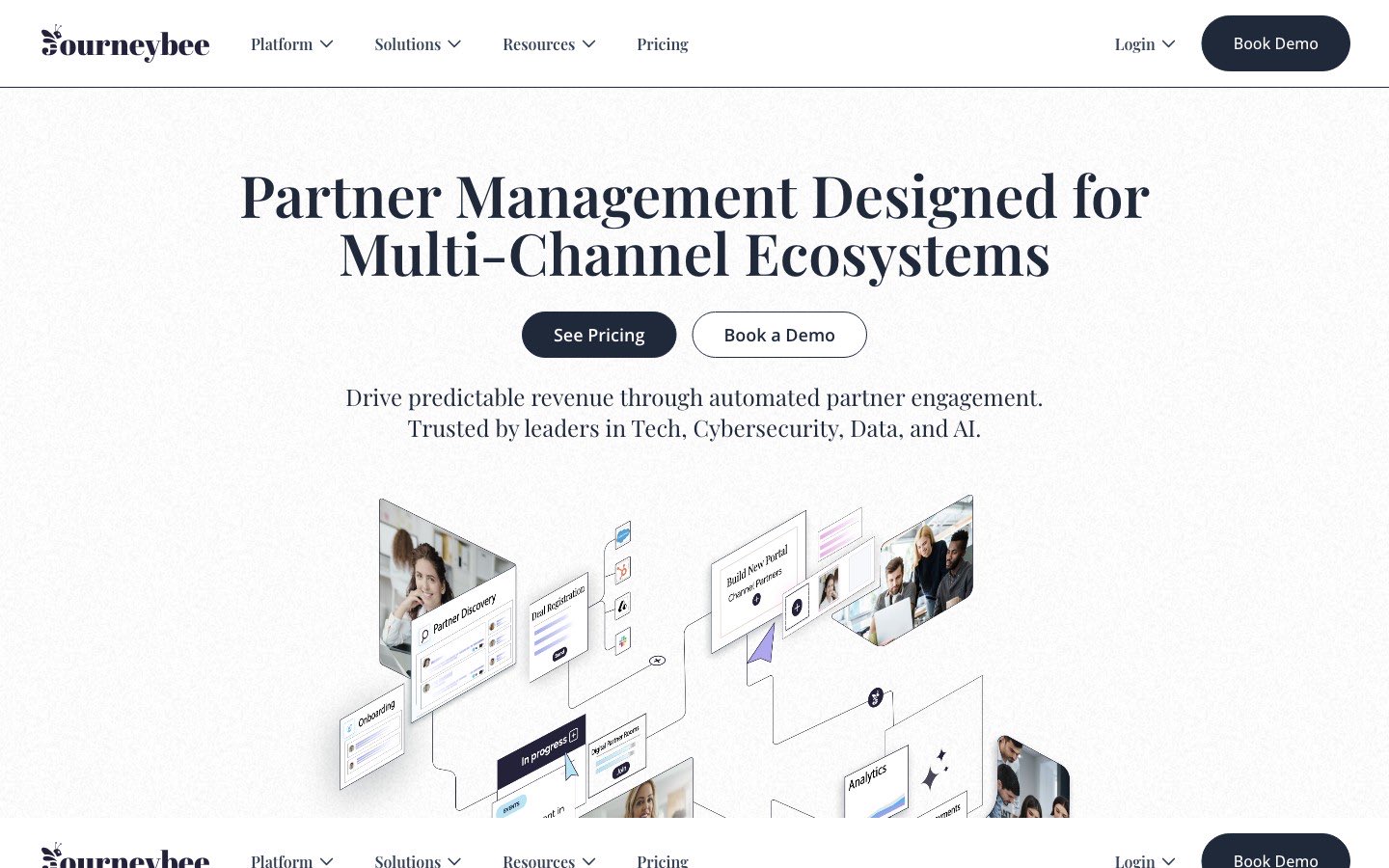
JourneyBee and Magentrix take opposite views of the partner portal itself. JourneyBee is AI-native and headless — it tries to get partners out of the portal, letting them register deals from Slack, Teams, or email while an AI agent automates routine work. Magentrix is a no-code portal platform built to be maximized — it mirrors your Salesforce or Dynamics schema directly and lets you shape a branded portal to your exact program.
Full disclosure: PartnerPortal publishes this comparison, and PartnerPortal competes with both JourneyBee and Magentrix. We’ve worked to keep this fair and factual — describing what each tool does and letting you draw the conclusion — rather than steering you toward us. We include a clearly labeled Where PartnerPortal fits section so our own stake is transparent, not smuggled in.
First, a useful signal: the philosophical split here is unusually clean. JourneyBee’s bet is that partners won’t log into a portal, so it pushes the program into Slack/Teams/email and automates with AI — minimize the portal. Magentrix’s bet is that a portal shaped exactly to your program and CRM is the point, so it gives you a deeply customizable, schema-mirroring platform — maximize the portal. If you want automation and low friction, that’s JourneyBee; if you want control and CRM fidelity, that’s Magentrix.
TL;DR: JourneyBee is headless AI + CRM breadth (Buzz, Pipedrive/Attio, LMS, MDF, dual SOC 2 + ISO, ~$499/mo), rated ~4.7/5 across ~25. Magentrix brings deep no-code customization on a PaaS, CRM schema mirroring (Salesforce/Dynamics), native HubSpot, a built-in LMS, MDF, and strong security (ISO 27001, SOC 2 Type II), at published $1,500–$3,000/mo with per-user licensing — proven since 2012 (~4.6/5 across 115+). JourneyBee minimizes the portal with automation; Magentrix maximizes it with customization.
At a glance
| JourneyBee | Magentrix | |
|---|---|---|
| Best known for | AI-native, headless PRM | No-code, customizable CRM-native portal |
| Founded / HQ | 2023, Stockholm (bootstrapped) | 2012, Toronto area (bootstrapped) |
| Core philosophy | Minimize the portal (off-portal + AI) | Maximize the portal (customize + mirror CRM) |
| AI | Buzz agent (MCP, model-agnostic) | None (no-code platform) |
| CRM approach | Agnostic sync (or standalone) | Schema mirroring (SF/Dynamics) + HubSpot |
| Native CRM | Salesforce, HubSpot, Pipedrive, Attio (+ Zoho) | Salesforce, Dynamics, HubSpot |
| Customization | Templates, embeddable | Deep (no-code PaaS: IDE, CLI, API) |
| Built-in LMS / MDF | Yes / Yes | Yes / Yes |
| Security | SOC 2 Type 2 + ISO 27001 | ISO 27001, SOC 2 Type II |
| Pricing | ~$499/mo, unlimited partners | $1,500–$3,000/mo (per-user/account) |
| Free tier | No | No |
| G2 rating | ~4.7 / 5 (~25 reviews) | ~4.6 / 5 (115+ reviews) |
The table captures the split: JourneyBee’s automation, breadth, and low price against Magentrix’s customization, CRM fidelity, and maturity. The sections below unpack it.
Overview of each
JourneyBee answers Magentrix’s build-a-portal PaaS with headless AI PRM: Stockholm 2023, partners work from Slack/Teams/email, Buzz agent, Pipedrive/Attio natives, LMS, flat pricing — opposite of schema-mirroring customization.
Magentrix is a no-code PRM and portal platform founded in the Toronto area in 2012 and still independent and bootstrapped (profitable, 500+ customers launched, 300,000+ users). It’s built on a platform-as-a-service and is distinctive for mirroring your CRM schema (Salesforce/Dynamics) instead of field mapping, plus a built-in LMS — a favorite of technically minded, Salesforce-centric buyers.
Both are well-rated and both hold strong security certifications; Magentrix has the larger, more mature base (115+ vs. ~25) while JourneyBee brings AI and off-portal breadth. See Reviews & ratings.
Brand & market position
JourneyBee is explicitly anti-legacy-PRM, countering static portals with AI-native, headless, plug-and-play operation for modern SaaS, cybersecurity, and AI companies — fight portal fatigue by not requiring the portal.
Magentrix positions on being 100% no-code, deeply customizable, and self-manageable — a portal you shape to your program and run yourself, with a CRM-integration architecture (schema mirroring) it argues is more robust than field mapping for complex Salesforce/Dynamics environments. It targets mid-market, Salesforce/Dynamics-centric companies comfortable investing in configuration.
The practical read: JourneyBee sells automation and off-portal engagement; Magentrix sells customization and CRM fidelity. Opposite answers to “what should a partner portal be.”
Feature comparison
Both cover core PRM and both include an LMS and MDF, so the differences live in portal philosophy, CRM approach, AI, and setup.
| Feature | JourneyBee | Magentrix |
|---|---|---|
| Portal philosophy | Headless / off-portal | Deeply customized portal |
| AI agent | Buzz (MCP, model-agnostic) | None |
| CRM approach | Agnostic sync / standalone | Schema mirroring (SF/Dynamics) + HubSpot |
| Native CRMs | SF, HubSpot, Pipedrive, Attio | SF, Dynamics, HubSpot |
| Customization | Templates, embeddable | No-code PaaS (IDE, CLI, API) |
| Built-in LMS & certifications | Yes | Yes |
| MDF | Yes | Yes |
| Two-tier distribution | Yes (managed) | Deal reg / lead distribution |
| Security | SOC 2 Type 2 + ISO 27001 | ISO 27001, SOC 2 Type II |
Portal philosophy: minimize vs. maximize
The crux. JourneyBee decouples the program from the portal — deal registration, lead sharing, and MDF requests happen in Slack, Teams, or email, with the portal as one surface among many. Magentrix makes the portal the centerpiece — a deeply customizable experience you mold to your program with no-code tools. If you believe partners won’t log in and want automation to meet them where they work, JourneyBee; if you want a rich, tailored portal that reflects your exact program and CRM, Magentrix.
CRM integration: agnostic breadth vs. schema mirroring
Both integrate with CRMs, but very differently. JourneyBee is CRM-agnostic — native sync with Salesforce, HubSpot, Pipedrive, and Attio (Zoho guide), plus standalone. Magentrix goes deep for Salesforce/Dynamics: instead of field mapping, it mirrors your CRM schema directly, so the portal reflects your exact data model and doesn’t break when the schema changes — a real advantage for complex, customized environments, and it adds Dynamics natively (JourneyBee has no Dynamics). So JourneyBee wins on breadth (Pipedrive/Attio, standalone); Magentrix wins on depth (schema mirroring, Dynamics).
AI vs. customization
This is the trade-off in one line. JourneyBee brings an agentic AI layer (Buzz — MCP-native, model-agnostic) that Magentrix doesn’t have. Magentrix brings deep no-code customization on an extensible PaaS (IDE, CLI, API) that JourneyBee doesn’t match. If your priority is automation, JourneyBee; if it’s control and configurability, Magentrix.
LMS, MDF & enablement
Both are strong here and closely matched. JourneyBee includes a built-in LMS (courses, quizzes, graded assessments, badged certifications that can gate tiers/MDF/commissions) and MDF. Magentrix includes a fully integrated LMS (lessons, courses, quizzes, certifications), MDF and co-branding, content management, and a translation studio for multi-language portals. For enablement depth, they’re comparable — Magentrix edges ahead on multi-language and content, JourneyBee on AI-assisted content generation.
Setup & who runs it
The flip side of customization is effort. JourneyBee emphasizes plug-and-play setup “in less than a day,” auto-mapping CRM objects. Magentrix’s flexibility comes with an admin learning curve reviewers note — powerful, but more to master, and it assumes you want to self-manage a configurable platform. A lean team wanting speed leans JourneyBee; a team wanting control and willing to configure leans Magentrix.
Integrations
| Category | JourneyBee | Magentrix |
|---|---|---|
| Native CRM | Salesforce, HubSpot, Pipedrive, Attio | Salesforce, Dynamics, HubSpot |
| CRM approach | Agnostic sync / standalone | Schema mirroring (SF/Dynamics) |
| AI | Buzz (MCP, model-agnostic) | — |
| Communication | Slack, Teams, Gmail, Outlook | — |
| Payments | XTRM | — |
| Extensibility | REST API | IDE, CLI, API-first REST API |
The headline: JourneyBee has broader CRM breadth (Pipedrive, Attio, standalone) plus AI and off-portal comms, while Magentrix has deeper CRM fidelity (schema mirroring, Dynamics) and a genuinely extensible PaaS. Neither is native with the other’s exclusive CRMs (Pipedrive/Attio vs. Dynamics). For the CRM landscape, see best PRM for Pipedrive, Zoho, and Attio.
Pricing
Neither has a free tier, but the models differ.
| JourneyBee | Magentrix | |
|---|---|---|
| Free tier | No | No |
| Entry | ~$499/mo (Standard) — unlimited partners | $1,500/mo (Essentials) |
| Higher tiers | Premium, Enterprise (custom) | $3,000/mo (Advanced); Unlimited (custom) |
| Billing basis | Internal-user tier (partners unlimited) | Per partner-user or partner-account |
| Notable | Free implementation advertised | Monthly billing adds 10%; may charge for inactive partners |
JourneyBee is cheaper and flatter — a flat ~$499/month with unlimited partners. Magentrix publishes $1,500–$3,000/month with per-user/per-account licensing, which reviewers note can charge for partners who rarely log in. For most programs, JourneyBee’s model is lower and more predictable; Magentrix’s premium buys deep customization and CRM fidelity. (Note: JourneyBee’s own pages cite inconsistent figures — $299–$799 — so confirm current numbers.) See our most affordable PRM software roundup.
Reviews & ratings
| Platform | JourneyBee | Magentrix |
|---|---|---|
| G2 | ~4.7 / 5 (~25 reviews) | ~4.6 / 5 (115+ reviews) |
| Other | ~4.8 Gartner Peer Insights (vendor-cited) | Strong mid-market satisfaction |
Both are well-rated; Magentrix has the larger, more mature base (115+ vs. ~25). Reviewers praise Magentrix’s Salesforce integration, flexibility/customization, built-in LMS, multi-language, and support, with critiques around an admin learning curve, reporting depth, and user-based licensing. JourneyBee’s reviewers praise flexibility, onboarding, fast setup, and security, with youth the main caveat. Read them yourself: JourneyBee on G2 and Magentrix on G2.
Considerations for your program
- You believe partners won’t log into a portal. JourneyBee’s headless/off-portal model meets them in Slack/Teams/email.
- You want a portal shaped exactly to your program and CRM. Magentrix’s no-code customization and schema mirroring.
- You want AI automation. JourneyBee’s Buzz; Magentrix has no AI layer.
- You have a complex Salesforce or Dynamics org. Magentrix’s schema mirroring keeps the portal aligned; JourneyBee has no Dynamics.
- Your CRM is Pipedrive or Attio (or none). JourneyBee is native and runs standalone; Magentrix isn’t.
- You want the lower, flatter price. JourneyBee (~$499/mo, unlimited partners) vs. Magentrix’s per-user premium.
- You have a lean team wanting fast setup. JourneyBee’s plug-and-play; Magentrix has an admin learning curve.
- Both hold strong security certifications. SOC 2 + ISO on each — confirm current attestations.
- You want a free tier or broad CRM coverage without deep configuration. That points to an alternative like PartnerPortal.
Where PartnerPortal fits
Since we publish this comparison, here’s our stake, plainly: PartnerPortal is a more accessible middle path — most compelling if you want broad CRM coverage and a fast, free start without JourneyBee’s youth or Magentrix’s configuration overhead.
- Versus JourneyBee, PartnerPortal is portal-first and free-to-start with the same five-CRM idea and an LMS — less headless/AI emphasis than JourneyBee, less PaaS work than Magentrix.
- Versus Magentrix, PartnerPortal is cheaper and faster to launch, adds Pipedrive and Attio natively, and offers a free tier — while Magentrix offers far deeper customization and CRM schema mirroring for those who need it.
Want JourneyBee’s CRM breadth without Magentrix’s PaaS learning curve? PartnerPortal is self-serve with five natives, free tier, and LMS — less headless AI, less schema mirroring.
Related reading
- JourneyBee PRM: Features, Pricing & Reviews — the full deep dive on JourneyBee.
- Magentrix PRM: Features, Pricing & Reviews — the full deep dive on Magentrix.
- JourneyBee vs Introw and PartnerStack vs Magentrix — other relevant head-to-heads.
- Best PRM Software in 2026 and Most Affordable PRM Software — the full category, ranked.
- Partner Relationship Management Platforms: Compare the Market — the full PRM landscape and every head-to-head in one place.
- Best PRM for Pipedrive, Zoho, and Attio — native CRM coverage compared.
Headless AI vs portal PaaS — or turnkey? Start PartnerPortal free or see CRM integrations.
Frequently asked questions
What is the main difference between JourneyBee and Magentrix?
They take opposite views of the portal. JourneyBee is AI-native and headless: it tries to get partners out of the portal entirely, letting them register deals from Slack, Teams, or email while an AI agent (Buzz) automates routine work. Magentrix is a no-code portal platform built to be deeply customized: it mirrors your Salesforce or Dynamics schema directly and lets you shape a branded partner portal to your exact program. JourneyBee minimizes the portal with automation; Magentrix maximizes it with customization and CRM fidelity.
Are JourneyBee and Magentrix direct competitors?
They compete for partner programs but attract different buyers. JourneyBee suits modern SaaS teams that want AI, off-portal engagement, and CRM-agnostic flexibility at a low price. Magentrix suits Salesforce- or Dynamics-centric companies (often mid-market) that want a highly customizable, self-managed portal with deep CRM integration and are willing to invest in configuration. If automation and flexibility across CRMs matter most, JourneyBee; if CRM-native customization matters most, Magentrix.
Which is more affordable, JourneyBee or Magentrix?
JourneyBee is cheaper and flatter. It publishes an entry plan around $499/month with unlimited partners (billed by internal-user tier) and advertises free implementation. Magentrix publishes $1,500/month (Essentials) and $3,000/month (Advanced), on annual contracts with per-partner-user or per-partner-organization licensing — which can charge for partners who rarely log in. Neither has a free tier. For most programs JourneyBee's flat, unlimited-partner pricing is lower; confirm current numbers with each vendor.
Which CRMs do JourneyBee and Magentrix integrate with?
Both are Salesforce-capable but diverge elsewhere. Magentrix integrates natively with Salesforce, Microsoft Dynamics, and HubSpot, and its signature is schema mirroring — it reflects your Salesforce/Dynamics data model directly instead of field mapping. JourneyBee integrates natively with Salesforce, HubSpot, Pipedrive, and Attio (plus a Zoho guide) and can run standalone. So JourneyBee uniquely covers Pipedrive and Attio, while Magentrix uniquely covers Dynamics with schema mirroring; both cover Salesforce and HubSpot.
Which has stronger AI, JourneyBee or Magentrix?
JourneyBee, clearly. It's AI-native: its Buzz agent is built on the Model Context Protocol and is model-agnostic (Claude, GPT-4o, Gemini), assisting with deal registration, lead matching, content and LMS generation, and support. Magentrix's strength is no-code customization and CRM schema mirroring rather than an agentic AI layer. If AI automation is central, that favors JourneyBee; if deep customization is, that favors Magentrix.
Which is more customizable, JourneyBee or Magentrix?
Magentrix, by design. It's built on a no-code platform-as-a-service with an IDE, CLI, and API-first architecture, and it mirrors your CRM schema, so you can tailor the portal, data model, and workflows to your exact program — reviewers say 'if we can imagine it, we can usually build it.' JourneyBee is customizable (drag-and-drop portal templates, embeddable) but its philosophy is automation and off-portal engagement, not deep portal configuration. The trade-off: Magentrix's flexibility comes with an admin learning curve.
What is a good alternative to both JourneyBee and Magentrix?
PartnerPortal is an alternative to both (and the publisher of this comparison, stated plainly). It offers broad native CRM coverage (HubSpot, Salesforce, Pipedrive, Zoho, Attio), a built-in LMS with certifications, automated commission and revenue tracking (via Stripe/QuickBooks), and a permanently free tier. Versus JourneyBee it adds a longer track record and a free start; versus Magentrix it's cheaper and faster to launch, though less deeply customizable and without schema mirroring.