
Channel Partner Onboarding: A Step-by-Step Process
A step-by-step channel partner onboarding process that turns signed partners into productive ones — agreement, portal access, training, deal-registration setup, and a fast first win, with a reusable onboarding checklist.
Written by the team at PartnerPortal — PRM software used to run B2B partner and channel programs.
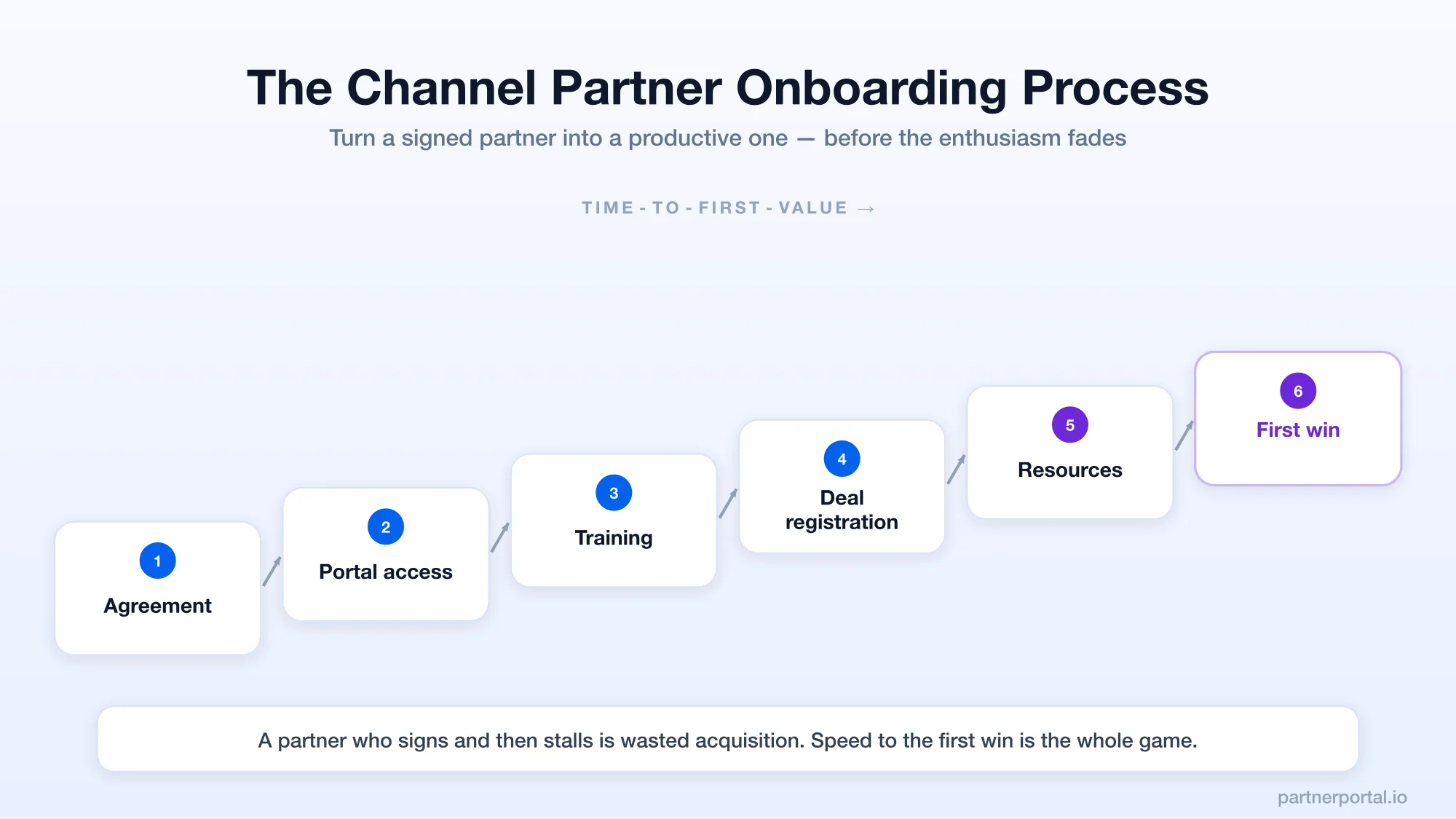
A signed partner is not a producing partner. The gap between the two is onboarding — and it’s where a surprising amount of channel investment leaks away. A partner’s enthusiasm peaks the day they sign; every day of friction after that bleeds momentum until, too often, they go dormant before ever registering a deal. Good onboarding closes that gap fast.
TL;DR: Channel partner onboarding turns a signed partner into a selling one. A reliable process:
- Execute the agreement and confirm commercial terms.
- Provision portal access — accounts and permissions, ideally automated.
- Deliver product and sales training partners can actually complete.
- Set up deal registration and explain the rules of engagement.
- Share resources and a first opportunity to act on.
- Drive an early win and schedule the first check-in.
The north star is time-to-first-value — but how fast that needs to be depends on the partner type. This is the “Onboard” stage of channel management, in depth.
Why onboarding decides whether a partner produces
Recruitment gets you a signature; onboarding gets you revenue. The two most expensive words in a channel program are “signed but inactive” — a partner you spent effort recruiting who never activates. Almost every dormant partner traces back to the same root cause: the first days after signing were slow, manual, or unclear, and the partner’s initial motivation decayed before they had a reason to come back.
That makes onboarding a momentum problem as much as a logistics one. The objective is time-to-first-value: get the partner to a first registered or sourced deal — or at minimum a first meaningful action — while they’re still energized from signing. Everything in the process below is in service of removing friction between signature and first win.
The channel partner onboarding process, step by step
1. Execute the agreement and confirm terms
Close out the paperwork immediately after the handshake: signed agreement, confirmed margin or commission, and any tier or territory terms. Momentum dies in contract limbo, so keep this tight — ideally the agreement is ready to sign the moment recruitment closes.
2. Provision portal access
Give the partner their partner portal accounts and the right permissions right away. This is the step most worth automating: a partner who has to wait days for a login has already lost momentum. Self-serve or instant provisioning matters more than it looks.
3. Deliver product and sales training
Equip the partner to represent you: what the product does, who it’s for, how to position it, and how to handle common objections. Keep it proportional — enough to sell confidently, not a certification marathon before they can start. Crucially, use partner training software you can track, so you know who’s actually ready versus who clicked through.
4. Set up deal registration and rules of engagement
Show the partner exactly how to register a deal and explain the rules of engagement — how deals are claimed, protected, and credited. Partners invest when they trust their pipeline is safe; getting deal registration working on day one is both an enablement step and a trust step.
5. Share resources and a first opportunity
Point the partner to the sales and marketing resources they’ll use — decks, one-pagers, demo assets — and, wherever possible, give them something concrete to act on: a co-marketing campaign, a lead, or a defined target segment. A partner with a specific next action is far likelier to activate than one handed a resource library and left to self-start.
6. Drive an early win and schedule the first check-in
Engineer a first win — a registered deal, a booked meeting, a completed co-marketing send — and schedule the first check-in or business review. The early win converts onboarding energy into a habit; the check-in signals the relationship is active and catches stalls before they harden into dormancy. From here, onboarding hands off into ongoing channel partner enablement.
Onboarding speed by partner type
“Onboard fast” is the right instinct, but how fast depends on the type of partner:
- Referral and reseller partners — speed genuinely matters. Their enthusiasm peaks at signing and a slow, manual start is the leading cause of dormancy. Aim for days, and automate everything you can.
- Strategic and technical partners (SIs, ISVs, alliances) — ramp is naturally longer. An integration build or a joint go-to-market plan plays out over quarters, so the goal is clear milestones and an early win, not raw speed.
The failure mode is identical in both cases — a partner who signs and then stalls — but the right pace differs. Match the onboarding tempo to the partner type instead of forcing one timeline on all of them.
The channel partner onboarding checklist
A reusable checklist to run every new partner through:
- Agreement signed; margin/commission and any tier/territory terms confirmed
- Portal accounts provisioned with correct permissions
- Product and sales training delivered, with completion tracked
- Deal registration set up and rules of engagement explained
- Sales and marketing resources shared
- Named point of contact assigned
- First opportunity, campaign, or target segment defined
- First check-in / business review scheduled
Adapt the depth by partner type, but the skeleton holds for all of them.
How software speeds onboarding
Manual onboarding — emailing logins, attaching decks, tracking training in a spreadsheet — is exactly the friction that creates dormant partners. A PRM (partner relationship management) platform compresses time-to-first-value by handling the repetitive parts automatically:
- Self-serve or automated portal provisioning, so access is instant.
- Onboarding content and training in one place, with visibility into who’s completed what.
- Deal registration ready from day one, synced to your CRM so reps see partner deals immediately.
- Resources and announcements partners can find without asking.
The point isn’t tooling for its own sake — it’s removing every avoidable day between signature and first win.
Onboarding mistakes that create dormant partners
- Slow or manual access. Making a motivated partner wait for a login is the most self-inflicted form of dormancy.
- Training with no completion tracking. If you can’t see who’s ready, you’re enabling blind and can’t tell a prepared partner from a lapsed one.
- No first opportunity. Handing over a resource library with no concrete next action leaves activation to chance.
- One timeline for all partner types. Rushing a strategic partner or under-supporting a transactional one both backfire.
- No first check-in. Without a scheduled touchpoint, stalls go unnoticed until the partner is already gone.
Onboarding is the highest-leverage stage in the channel: fix it and every dollar spent on recruitment starts paying back. If you want to run onboarding, training, and deal registration in one synced system, you can launch a free partner portal, or see how the platforms compare in our guide to the best PRM software.
Frequently asked questions
What is channel partner onboarding?
Channel partner onboarding is the process of turning a newly signed partner into a productive, selling one. It covers executing the agreement, provisioning portal access, delivering product and sales training, setting up deal registration, and guiding the partner to an early win. The goal is time-to-first-value — getting the partner to their first registered or sourced deal before initial enthusiasm fades.
What are the steps in the channel partner onboarding process?
A typical channel partner onboarding process has six steps: (1) execute the agreement and confirm commercial terms, (2) provision partner portal access and accounts, (3) deliver product and sales training, (4) set up deal registration and explain the rules of engagement, (5) share enablement resources and the first co-marketing or lead opportunity, and (6) drive an early win and schedule the first check-in.
How long should channel partner onboarding take?
It depends on the partner type. Referral and reseller partners should be onboarded fast — ideally days — because their enthusiasm peaks at signing and a slow start lets them go dormant. Strategic and technical partners naturally ramp over quarters, so the goal there is clear milestones and an early win rather than raw speed. The failure mode is the same for both: a partner who signs and then stalls.
Why do partners go dormant after signing?
The most common cause is a slow, manual onboarding that lets early enthusiasm decay before the partner ever sells. Signing is the moment of peak motivation; every day of friction — waiting on portal access, unclear next steps, no training, no first opportunity — bleeds that motivation. Automating access and giving the partner an obvious path to a first deal is the main defense against dormancy.
What's the difference between partner onboarding and enablement?
Onboarding gets a partner started — agreement, access, initial training, and a first win in the first days or weeks. Enablement is the ongoing supply of content, training, and support that keeps them selling over the life of the relationship. Onboarding is the on-ramp; enablement is the road. A good onboarding hands off cleanly into a continuous enablement motion.
What should a channel partner onboarding checklist include?
A channel partner onboarding checklist should include: signed agreement and confirmed terms; portal and account provisioning; product and sales training with a way to confirm completion; deal-registration setup and rules of engagement; access to sales and marketing resources; a named point of contact; a defined first opportunity or target; and a scheduled first check-in or business review.