
Channelscaler vs PartnerPortal (2026): A Side-by-Side Comparison
Channelscaler (formerly Allbound) vs PartnerPortal compared — enterprise channel incentive automation vs. an accessible, broad-CRM PRM. CRM coverage, MDF/rebates, pricing, and reviews to help you choose.
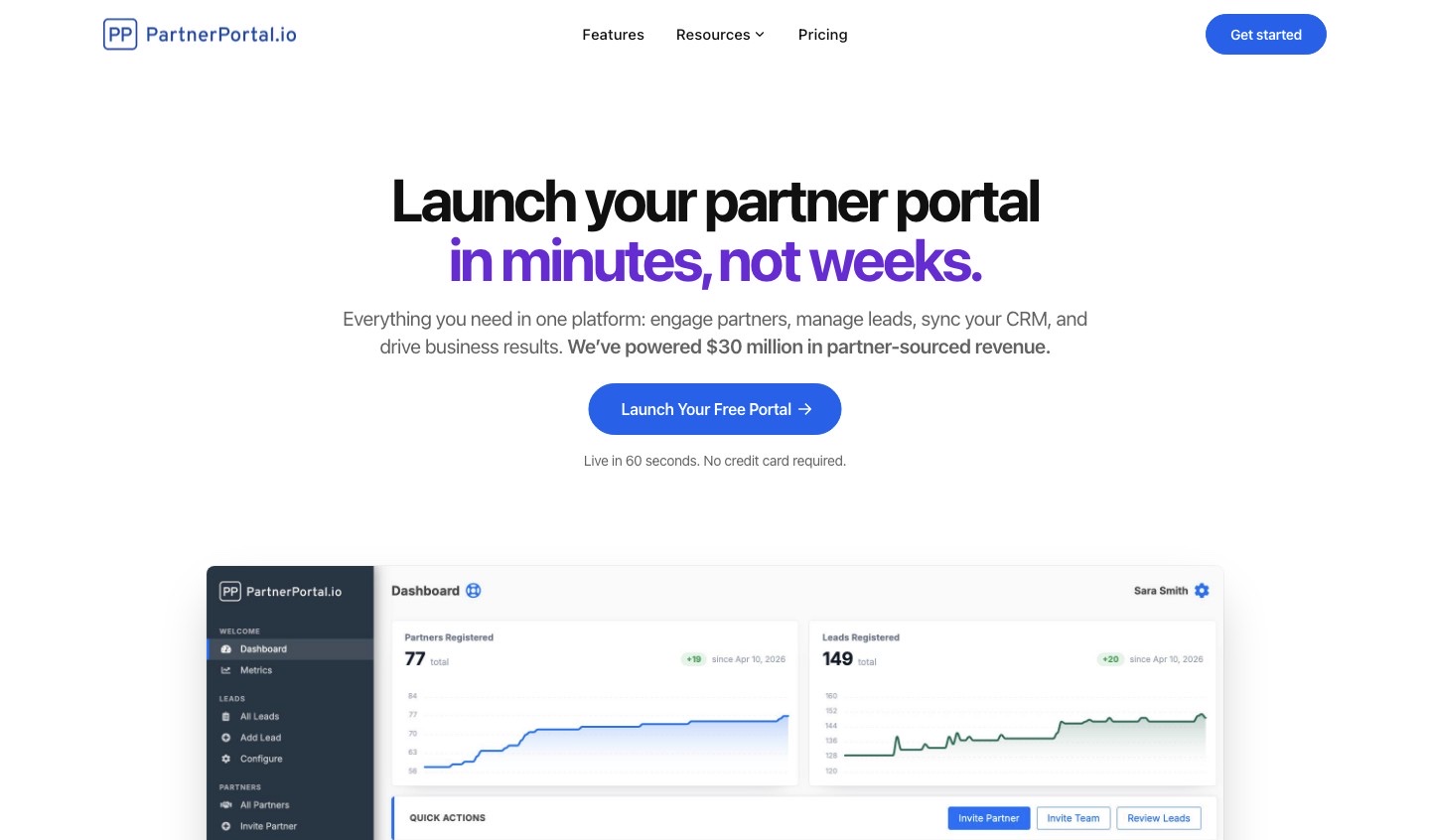
Channelscaler (Allbound + Channel Mechanics) is PRM plus a deep incentive engine — rebates, SPIFFs, claims, POS — at enterprise quote pricing. PartnerPortal is self-serve SMB/mid-market: five native CRMs, free tier, no incentive-automation suite. Compare them only if you’re unsure whether you need that machinery.
Full disclosure: PartnerPortal publishes this comparison, and PartnerPortal is a competitor of Channelscaler. We’ve worked to keep this fair and factual — stating what each tool does and letting you draw the conclusion — rather than steering you toward us. Where the facts favor Channelscaler, we say so.
First, a useful signal: the deciding question is usually how structured and multi-tier your incentive programs are, and what you can spend. If you run a complex channel with distributors, rebates, MDF, and claims that need programmatic automation, Channelscaler is built for that (and priced accordingly). If you want an affordable, broad-CRM PRM you can launch quickly — easy to use, with a permanently free tier, transparent pricing, and a built-in LMS — PartnerPortal is built for that. Both manage partners; one does enterprise incentive management and the other does accessible, modern PRM.
TL;DR: Channelscaler (Allbound + Channel Mechanics) is an enterprise channel platform pairing PRM (portal, content, deal reg, playbooks, learning) with deep incentive automation — MDF, rebates, SPIFFs, claims, POS data, distributor management — native Salesforce/HubSpot, sold via custom enterprise contracts. PartnerPortal is an accessible SMB/mid-market PRM — easy to use, five native CRMs (HubSpot, Salesforce, Pipedrive, Zoho, Attio), a permanently free tier then a transparent, published $249/$399/mo, and a built-in LMS, launchable in ~60 seconds, rated ~4.5/5 (it also automates commission and revenue tracking via Stripe/QuickBooks). Channelscaler wins on incentive-automation depth and enablement; PartnerPortal wins on ease of use, a permanently free tier, transparent published pricing, CRM breadth, and speed to launch.
At a glance
| Channelscaler (formerly Allbound) | PartnerPortal | |
|---|---|---|
| Best known for | Enterprise PRM + incentive automation | Broad native CRM coverage + free entry point |
| Founded / HQ | Allbound 2014 + Channel Mechanics; rebranded 2025 | 5+ years in market, self-serve PRM |
| Target buyer | Mid-market to enterprise channels | SMB / mid-market B2B SaaS |
| Incentives | MDF, rebates, SPIFFs, claims, POS | Commission + revenue tracking (Stripe/QuickBooks) |
| Distributor management | Yes (multi-tier) | Referral/affiliate-first; lighter reseller |
| Enablement | Playbooks, learning | Built-in LMS (courses, lessons, completion) |
| Native CRM | Salesforce, HubSpot | HubSpot, SF, Pipedrive, Zoho, Attio |
| Setup | Enterprise onboarding | Self-serve, ~60 seconds |
| Free tier | No | Yes (permanent) |
| Pricing | Custom (enterprise) | Free, then $249–$399/mo |
| G2 rating | Allbound ~4.4 / 5 (mid-merger) | ~4.5 / 5 (~50 reviews) |
The table frames the trade: Channelscaler’s enterprise incentive automation, enablement, and distribution depth against PartnerPortal’s ease of use, affordability, transparent pricing, broad CRM coverage, and built-in LMS. The sections below unpack it.
Overview of each
Channelscaler is an enterprise channel platform formed when Allbound (a PRM founded in 2014) acquired Channel Mechanics (an incentive-automation vendor) in 2024, rebranding to Channelscaler on May 30, 2025. It combines PRM (partner portal, content, deal registration, playbooks, learning) with deep incentive automation — MDF, rebates, SPIFFs, claims, and point-of-sale-based programs — for complex, multi-tier channels. For the full breakdown, see our Channelscaler overview.
PartnerPortal is a PRM for SMB and mid-market teams that want a partner portal live quickly — and free to start. It covers the core ground (portal, lead and deal registration, commissions) with an emphasis on ease of use, broad native CRM coverage (five CRMs, including Pipedrive, Zoho, and Attio), a permanently free tier, transparent published pricing, and a built-in LMS — plus automated commission and revenue tracking (connect Stripe or QuickBooks to capture customer revenue and calculate what partners are owed, then approve → export → mark paid). For the wider field, see best PRM software.
On reviews, Allbound historically sat around ~4.4/5 (the Channelscaler brand is still consolidating post-merger); PartnerPortal sits at ~4.5/5 across ~50. See Reviews & ratings.
Brand & market position
- Channelscaler positions as an enterprise channel platform that unifies partner management and incentive automation — the Allbound PRM plus Channel Mechanics’ incentives engine — for organizations with distributors, rebates, and MDF to manage at scale.
- PartnerPortal positions as one of the first self-serve PRMs — fast, self-serve launch, broad native CRM integration, and affordability — targeting SMB and mid-market B2B SaaS teams that want to go live quickly and cheaply.
The practical read: Channelscaler sells enterprise incentive automation on top of PRM; PartnerPortal sells an easy-to-use, transparently priced, broad-CRM PRM. Different scales, different budgets.
Feature comparison
Both offer a portal, deal registration, and incentives — but the incentive layer and scale are where they diverge most.
| Feature | Channelscaler | PartnerPortal |
|---|---|---|
| Partner portal & deal registration | Yes | Yes |
| MDF / co-op funds | Yes | No |
| Rebates & claims | Yes | No |
| Point-of-sale (POS) programs | Yes | No |
| Commissions / revenue | Structured incentives (calculate/manage) | Commission + revenue tracking (Stripe/QuickBooks); AP-ready exports |
| Distributor / multi-tier | Yes (multi-tier) | Referral/affiliate-first |
| Enablement | Playbooks, learning | Built-in LMS (courses, lessons) |
| Free tier & self-serve launch | No | Yes (~60 seconds) |
| Native CRMs | Salesforce, HubSpot | HubSpot, SF, Pipedrive, Zoho, Attio |
Scale & who it’s for
The core difference. Channelscaler is sized for mid-market and enterprise channels with distributors and structured incentive programs. PartnerPortal is sized for SMB and mid-market — a team that wants to launch and reward partners without enterprise machinery. Choosing between them is mostly about program complexity and budget, not a feature-for-feature toss-up.
Incentive automation vs. commission tracking
Both calculate what partners are owed, but at different depths — and neither actually sends the money (both hand disbursement to your finance/AP system). Channelscaler’s incentive engine (Channel Mechanics heritage) is programmatic and enterprise-grade — designed for structured, multi-tier programs across distributors and resellers, with MDF, rebates, and claims. PartnerPortal offers flexible commission structures, partner tiers, and automated commission and revenue tracking: connect Stripe or QuickBooks and it captures charge-level customer revenue, matches it to the right partner and deal, and calculates commissions owed, then runs a finance-friendly approve → export → mark-paid workflow with AP-ready exports (Ramp, BILL, QuickBooks). So if your model is MDF, rebates, and claims across a complex channel, that’s Channelscaler; if it’s tracking straightforward partner commissions tied to real revenue, PartnerPortal covers it simply.
MDF, rebates & claims
A clear Channelscaler strength PartnerPortal doesn’t match. Channelscaler offers MDF/co-op fund management, rebates, claims processing, and point-of-sale-based incentive programs — the machinery of a mature distribution channel. PartnerPortal has none of these; its scope is commission and revenue tracking, not funds and claims. If MDF, rebates, and claims are core to your channel, this decides it in Channelscaler’s favor.
Enablement, LMS & ease of launch
A mixed picture. On enablement, Channelscaler (via Allbound) offers playbooks and learning content tooling built for structured channel enablement. PartnerPortal includes a built-in LMS (courses, ordered lessons, completion tracking, auto-awarded certifications) — modern and included at its paid tiers. Both deliver training; Channelscaler’s enablement is broader for complex programs, PartnerPortal’s LMS is simpler and turnkey. On launch, PartnerPortal is self-serve and free in about 60 seconds, while Channelscaler is an enterprise onboarding. For speed and a free start, PartnerPortal.
Distribution & multi-tier
Channelscaler leads. Its platform supports multi-tier distribution with distributors and resellers, matching its incentive-automation focus. PartnerPortal is referral- and affiliate-first; it supports reseller programs but multi-tier distribution isn’t its focus. For a serious distribution channel, Channelscaler; for referral/affiliate and single-tier reseller programs, PartnerPortal fits.
Integrations
| Category | Channelscaler | PartnerPortal |
|---|---|---|
| Native CRM | Salesforce, HubSpot | HubSpot, Salesforce, Pipedrive, Zoho, Attio |
| Other CRM | Via API / middleware | Via Zapier / API |
| Billing / accounting | Incentive/claims engine | Stripe, QuickBooks (revenue tracking) |
| Communication | Standard | Slack |
| Everything else | API | Zapier, API |
Both are native with Salesforce and HubSpot (Channelscaler’s HubSpot integration has drawn some historical friction complaints); PartnerPortal adds Pipedrive, Zoho, and Attio with self-serve setup. So on core CRM they overlap, but PartnerPortal has broader coverage for common SMB stacks, while Channelscaler brings its incentive/claims engine into the mix. For the CRM landscape, see best PRM for Pipedrive, Zoho, and Attio.
Pricing
PartnerPortal is published and low; Channelscaler is custom and enterprise.
| Channelscaler | PartnerPortal | |
|---|---|---|
| Model | Custom, demo-led enterprise contract | Published, flat per tier |
| Free tier | No | Yes (permanent) |
| Entry | Custom (typically tens of thousands/yr+) | Free, then $249/mo (up to 100 partners) |
| Higher tiers | Scales with modules & partner volume | $399/mo (unlimited) |
| Extra costs | Implementation, incentive modules, services | None |
PartnerPortal is far cheaper and transparent — a free tier, then $249/$399/month. Channelscaler publishes no pricing; as an enterprise platform it’s a custom contract typically in the tens of thousands per year and up, depending on modules and volume. If budget and predictability matter, PartnerPortal; Channelscaler’s cost reflects enterprise incentive automation and scale. See our most affordable PRM software roundup.
Reviews & ratings
| Platform | Channelscaler (Allbound) | PartnerPortal |
|---|---|---|
| G2 | Allbound ~4.4 / 5 | ~4.5 / 5 (~50 reviews) |
| Note | Brand consolidating post-merger | SMB/mid-market, smaller base |
Allbound/Channelscaler reviewers have praised its portal, content/enablement, and (now) incentive breadth, with critiques around the HubSpot integration, some UI/UX, and post-merger consolidation as the Channelscaler brand settles. PartnerPortal reviewers praise ease of use, fast setup, broad CRM coverage, value, and responsive support, with critiques around a smaller review base and lighter enterprise/MDF tooling. Read them yourself: Allbound on G2 and PartnerPortal on G2.
Considerations for your program
Do you need Channelscaler’s rebate/claims/POS engine, or just a working partner portal?
- You run distributors and structured, multi-tier incentives. Channelscaler’s MDF, rebates, claims, and POS programs are built for you.
- You’re an SMB or scaling SaaS team. PartnerPortal’s price and speed fit; Channelscaler is likely too heavy.
- MDF, rebates, and claims are core. Channelscaler; PartnerPortal doesn’t have them.
- You want a free start, transparent pricing, and fast, easy setup. PartnerPortal’s free tier, published $249/$399 plans, and self-serve launch vs. Channelscaler’s sales-led enterprise quote.
- Your CRM is Pipedrive, Zoho, or Attio. PartnerPortal is native; Channelscaler isn’t. (Both cover Salesforce and HubSpot.)
- You want a built-in LMS out of the box. PartnerPortal includes one at its paid tiers.
- You want automated commission and revenue tracking (Stripe/QuickBooks) with AP-ready exports. PartnerPortal does this natively; note that neither product sends funds itself — both hand disbursement to finance.
- You want deeper enablement (playbooks, structured learning) for a complex channel. Channelscaler is more built-out.
- You want the fastest, lowest-commitment launch. PartnerPortal is self-serve and free in ~60 seconds.
- You run multi-tier distribution. Channelscaler’s tooling is more developed.
Related reading
- Channelscaler (formerly Allbound): Features, Pricing & Reviews — the full deep dive on Channelscaler.
- Kiflo vs Channelscaler, PartnerStack vs Channelscaler, and JourneyBee vs Channelscaler — other contrasts with the enterprise incentive platform.
- Best PRM Software in 2026 — every major PRM, including enterprise options.
- Partner Relationship Management Platforms: Compare the Market — the full PRM landscape and every head-to-head in one place.
- Most Affordable PRM Software in 2026 — PRMs ranked by real cost.
- Best PRM for Pipedrive, Zoho, and Attio — native CRM coverage compared.
Don’t need rebates and claims — just CRM-native deal registration? Start PartnerPortal free or see integrations.
Frequently asked questions
What is the main difference between Channelscaler and PartnerPortal?
Scale and incentive depth. Channelscaler (formerly Allbound, now merged with Channel Mechanics) is an enterprise channel platform combining PRM with a deep incentive-automation engine — MDF, rebates, SPIFFs, claims, point-of-sale data, and distributor management — sold as a custom enterprise contract. PartnerPortal is an accessible SMB/mid-market PRM known for ease of use, broad native CRM coverage (five CRMs), a permanently free tier, and transparent published pricing, launchable in about 60 seconds; it also automates commission and revenue tracking via native Stripe and QuickBooks integrations (it does not itself send funds — commissions run through an approve → export → mark-paid workflow with AP-ready exports). Channelscaler is deeper on enterprise incentive automation; PartnerPortal is easier, cheaper, faster, and broader on CRM.
Are Channelscaler and PartnerPortal direct competitors?
They overlap on partner management but serve different segments. Channelscaler targets mid-market and enterprise organizations — often with distributors and complex, multi-tier channels — that need MDF, rebates, claims, and POS-based incentive automation. PartnerPortal targets SMB and mid-market teams that want fast, affordable setup and broad CRM coverage. A large distribution channel will value Channelscaler's incentive depth; a lean SaaS team will find it heavy and prefer PartnerPortal's accessibility.
Which is more affordable, Channelscaler or PartnerPortal?
PartnerPortal, clearly. It offers a permanently free tier and paid plans at $249/month (up to 100 partners) and $399/month (unlimited). Channelscaler does not publish pricing; as an enterprise platform (the Allbound + Channel Mechanics combination) it's a custom, demo-led contract typically in the tens of thousands per year and up, depending on modules and partner volume. For a cost-sensitive team, PartnerPortal is far cheaper; confirm current pricing with each vendor.
Which CRMs do Channelscaler and PartnerPortal integrate with?
Both integrate natively with Salesforce and HubSpot. Channelscaler (via Allbound's heritage) integrates with Salesforce and HubSpot, though some reviewers have noted friction in the HubSpot integration historically. PartnerPortal is native with five CRMs — HubSpot, Salesforce, Pipedrive, Zoho, and Attio. So both cover Salesforce and HubSpot; PartnerPortal adds native Pipedrive, Zoho, and Attio with self-serve setup.
What is the difference between Channelscaler incentives and PartnerPortal commissions?
Depth and structure. Channelscaler's incentive automation (from Channel Mechanics) is enterprise-grade and structured: MDF, rebates, tiered SPIFFs, claims management, and point-of-sale-based programs across distributors and resellers. PartnerPortal offers flexible commission structures, partner tiers, and automated commission and revenue tracking — connect Stripe or QuickBooks and it captures customer revenue and calculates what each partner is owed, then runs an approve → export → mark-paid workflow with AP-ready exports (Ramp, BILL, QuickBooks). Neither product moves money itself: both calculate what's owed and hand disbursement to your finance/AP system. Channelscaler is programmatic incentive management for a complex channel; PartnerPortal is accessible commission tracking for a lean program.
What is Channelscaler and how does it relate to Allbound?
Channelscaler is the rebranded entity formed after Allbound acquired Channel Mechanics in 2024; the combined company rebranded to Channelscaler on May 30, 2025. It pairs Allbound's PRM (partner portal, content, deal registration, playbooks, learning) with Channel Mechanics' incentive-automation engine (MDF, rebates, SPIFFs, claims). If you knew the product as Allbound, Channelscaler is its current name with added incentive-automation depth.
Does PartnerPortal have MDF and rebates like Channelscaler?
No. Channelscaler offers enterprise MDF/co-op fund management, rebates, claims processing, and point-of-sale-based incentive programs. PartnerPortal focuses on a partner portal, deal registration, a built-in LMS, and automated commission and revenue tracking (via Stripe/QuickBooks); it doesn't offer MDF, rebates, or claims machinery. If MDF, rebates, and claims are core to your channel, that's a Channelscaler strength PartnerPortal doesn't match.
Is PartnerPortal a good Channelscaler alternative?
For teams that find Channelscaler too heavy or expensive, yes — PartnerPortal offers a free tier, far lower and fully published pricing, easier self-serve setup, broad native CRM coverage (including Pipedrive and Attio), a built-in LMS, and automated commission and revenue tracking. But if you genuinely need Channelscaler's MDF, rebates, claims, and distributor-focused incentive automation, PartnerPortal deliberately doesn't try to match that depth. It's a strong alternative for accessibility; Channelscaler remains deeper for enterprise incentive management.